


How to Stop Leather Ink Spreading on a Sofa

How to Stop Leather Ink Spreading on a Sofa. An ink mark on a leather sofa can go from a small line to a much larger stain in minutes. The key to stop leather ink spreading is to act calmly, avoid rubbing, and keep unsuitable cleaning products away from the area. Leather is not like fabric: the wrong approach can push ink into the surface, strip the colour or leave a pale, shiny patch that is harder to repair than the original mark.
Whether the ink came from a leaking biro, a child’s pen, paperwork left on the armrest or a handbag placed on the cushion, the first few minutes matter. A careful response gives you the best chance of limiting the damage and preserving your sofa’s finish.
How to stop leather ink spreading immediately
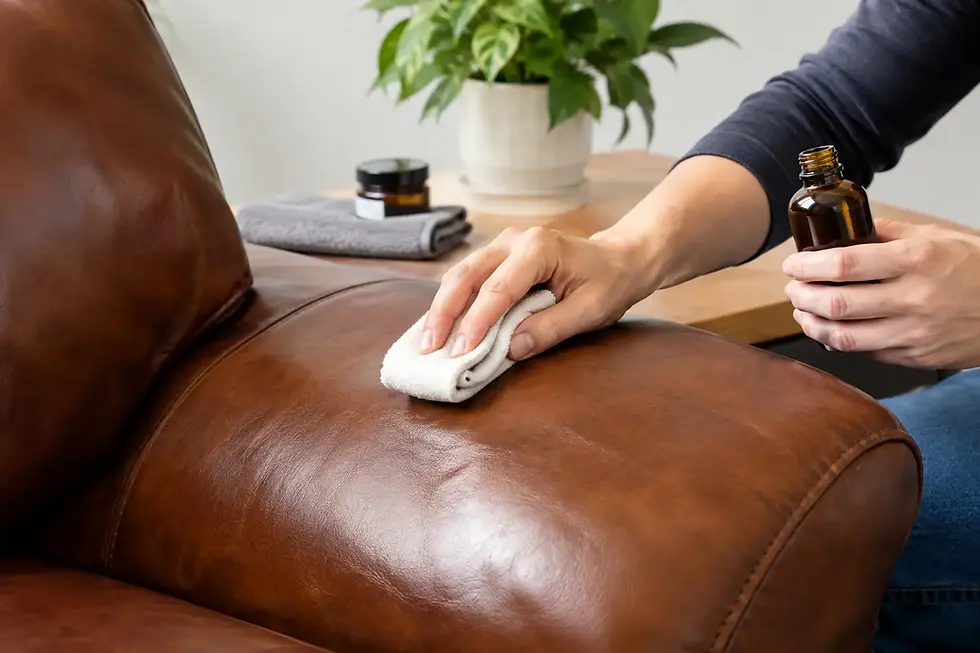
Start by moving the source of the ink away from the sofa. If a pen has leaked onto a cushion, do not lift or drag it across the leather. Place a clean, dry white cloth or plain kitchen paper gently over the mark and allow it to absorb any loose ink.
There are four simple rules to follow at this stage:
Blot lightly - do not rub, scrub or use circular movements.
Work from the outside of the mark towards the centre.
Use only a clean white cloth, as coloured cloths can transfer dye.
Keep the area dry and avoid heat from hairdryers, radiators or direct sunlight.
Blotting from the edge inward helps prevent the ink being carried into clean leather. Change to a fresh section of cloth as soon as it picks up ink. If you continue using the same area, you risk putting the ink straight back onto the sofa.
Do not panic if the mark remains visible after blotting. The aim is not to remove every trace immediately. It is to prevent fresh ink from travelling further while protecting the leather’s colour and protective coating.
Do not test cleaners on the ink mark
It can be tempting to reach for whatever is under the sink, particularly if the stain looks dark or fresh. However, household cleaners, disinfectant wipes, washing-up liquid and general-purpose sprays are not designed for coloured leather upholstery. They may make the stain look lighter at first, but can leave the repaired area dull, bleached, sticky or uneven.
The same applies to baby wipes. Many contain moisturisers, alcohol or fragrance that can affect the finish. A sofa may feel soft after using one, yet the residue can attract dirt and create a patchy appearance over time.
Why ink spreads on leather furniture
Most modern leather sofas have a protective coloured finish. This offers some resistance to everyday spills, but ink can still sit on the coating and migrate when it is rubbed, warmed or exposed to liquid. The more pressure used, the more likely it is that pigment is pushed into the grain and surrounding finish.
Some leather types are more vulnerable than others. Smooth, protected leather usually gives a specialist a better chance of treating a recent mark. Aniline, semi-aniline, worn, cracked or heavily faded leather can absorb ink more quickly because the surface protection is lighter or damaged.
That is why a method that worked on one leather chair may cause problems on another sofa. The leather’s age, colour, finish and condition all affect the safest repair route.
What to avoid when treating a leather ink stain
How to Stop Leather Ink Spreading on a Sofa. Solvents are one of the biggest risks. Nail polish remover, acetone, methylated spirits, perfume, hairspray and strong alcohol-based products may dissolve ink, but they can also dissolve or soften the leather coating. This often creates a larger pale patch, removes the original sheen or causes the surface to feel rough.
Avoid soaking the leather with water as well. Water will not remove most ink, and excess moisture can spread the mark at the edges. It can also leave tide marks, especially on older or absorbent leather.
Creams, oils and polishes are not a solution either. They may temporarily disguise a light mark by darkening the surrounding leather, but they do not lift the ink. More importantly, they can make later colour restoration more difficult because the surface must be properly prepared before it can be repaired.
If you have already tried a cleaner, stop applying products and allow the area to dry naturally. Make a note of what was used if possible. This helps a leather repair specialist assess whether the problem is the ink itself, damage to the colour coating, or both.
When a professional leather repair is the sensible choice
A professional assessment is worthwhile when the mark is large, has been rubbed, is on a pale sofa, or has been there for more than a day or two. It is also the right option when the leather has become faded, tacky, lighter in colour or shiny around the stain after an attempted clean.
Professional ink removal is not always simply a matter of wiping the surface. Depending on the leather, the process may involve carefully reducing the ink, preparing the affected section, restoring lost colour and applying a finish that matches the surrounding upholstery. The goal is to make the repair blend naturally rather than leave an obvious clean circle on the cushion or armrest.
This approach is particularly valuable for sofas with existing wear. If the surrounding area has scuffs, colour loss or cracking, treating only the ink mark can make the rest of the leather look tired by comparison. A targeted refurbishment can bring the colour and finish back into balance.
At Ashbourne Leather Care, customers can send photos of the damage and their location for a straightforward quotation before arranging an on-site visit. For homeowners across Dublin, Meath, Kildare and Louth, this means there is no need to struggle with removing a large sofa from the house or risk further damage during transport.
What a good leather ink repair should achieve
The best outcome depends on how quickly the ink is addressed and the condition of the leather beneath it. A fresh mark on well-protected leather may respond very well to professional treatment. Older stains or marks on absorbent, distressed leather can be more challenging, but a skilled repair can often make them far less noticeable while restoring the damaged colour and finish.
A proper repair should not leave the area dramatically flatter, glossier or a different shade from the rest of the sofa. Colour matching matters, especially on cream, beige, grey, tan, red and dark leather where even a small difference can stand out in daylight.
It is worth being realistic about deep creases and badly worn leather. Ink may settle into cracks and grain lines, so the repair may need to address the wider panel rather than one tiny spot. This is not unnecessary work - it is often what produces a cleaner, more natural-looking result.
Preventing future ink marks on your sofa
Small changes can reduce the chance of another ink accident. Keep pens in a container rather than loose on the armrest, check school bags and handbags for leaking pens, and avoid placing paperwork directly on light-coloured leather for long periods. Heat can encourage ink transfer, so take extra care near sunny windows or radiators.
Regular professional cleaning and conditioning can also help maintain the protective finish on leather furniture. It will not make a sofa stain-proof, but a well-maintained surface is generally easier to clean and restore than leather that is dry, worn or heavily soiled.
If an ink mark appears, resist the urge to experiment. Blot gently, keep the leather dry, take clear photos in natural light and seek advice before the stain turns into a larger repair. A prompt, careful decision can help bring your leather back to life and keep a much-loved sofa looking at home for years to come.


Comments