


Leather Cleaning Versus Sofa Replacement

A leather sofa can look past its best long before it has reached the end of its useful life. The real choice in leather cleaning versus sofa replacement is rarely as simple as ‘old sofa out, new sofa in’. Fading, worn seat cushions, scuffs, stains and colour loss can make a quality sofa feel tired, but many of these issues can be professionally improved at home without the cost, disruption and uncertainty of replacing it.
For homeowners across Dublin, Meath, Kildare and Louth, the best decision comes down to the condition of the leather, the structure beneath it and the result you want to achieve. A proper assessment can tell you whether cleaning and restoration will bring your furniture back to life, or whether replacement is the more sensible investment.
When leather cleaning is the sensible first step
Leather collects more than everyday dust. Body oils, moisturiser, pet residue, food spills and general household grime can settle into the surface, especially on armrests, headrests and favourite seats. Over time, this build-up dulls the finish and makes the colour appear uneven.
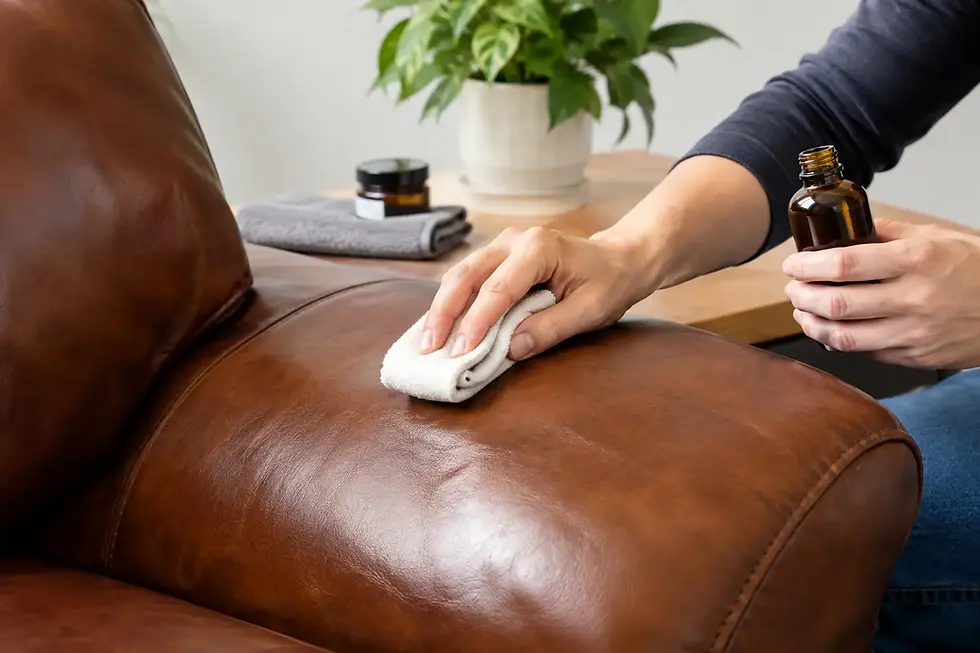
Professional leather cleaning removes surface dirt safely and prepares the material for any further restoration work. On a sofa that is structurally sound and only looks dull, grubby or slightly faded, cleaning may make a noticeable difference straight away. It can restore a more even appearance, improve the feel of the leather and prevent dirt from causing further wear.
Cleaning alone, however, is not a cure for every problem. If the protective finish has worn away, the colour has rubbed off, or there are scratches and stains within the surface, the sofa may need more than a clean. This is where specialist refurbishment can offer a far better outcome than household products or a general upholstery-cleaning service.
Cleaning versus restoration: know the difference
Leather Cleaning Versus Sofa Replacement. Many people use the word ‘cleaning’ to describe any attempt to improve a leather sofa. In practice, cleaning and restoration are different services, although they often work together.
Cleaning deals with dirt and surface contamination. Restoration addresses visible damage and wear. This may involve repairing scuffs and scrapes, treating targeted marks, rebuilding worn areas, restoring lost colour and refinishing the leather so the repaired section blends naturally with the surrounding upholstery.
For example, an ink mark on a pale leather cushion, a bleach splash on an armrest or a patch of colour loss where people regularly sit will not usually disappear with a wipe-down. Trying strong cleaners, alcohol-based products or internet remedies can spread the damage, strip the finish or leave a permanent light patch. A specialist approach is designed around the type of leather, its coating and the specific damage involved.
Ashbourne Leather Care provides on-site cleaning, colour restoration and targeted leather repairs, so there is no need to arrange collection or be without your sofa while work is carried out elsewhere.
The true cost of sofa replacement
Replacing a leather sofa is about more than the ticket price. A comparable new sofa can be expensive, particularly if your current furniture was made with good-quality leather, a solid frame and supportive cushions. Then there is delivery, removal of the old suite, time spent shopping and the risk that the new piece will not suit the room as well as the original.
A new sofa may also take weeks to arrive. Even then, its leather may not match the thickness, finish or comfort of the furniture you already own. This matters with older, well-made suites that have softened beautifully over time and fit the scale of the room perfectly.
Restoration is often the more cost-effective route when the frame, springs, webbing and cushion interiors are still in good order. Treating a damaged panel, recolouring faded seating areas or refreshing the finish can extend the life of furniture you already know and enjoy. It also avoids sending a repairable sofa to landfill simply because its surface looks worn.
That said, restoration is not always the right answer. If the frame is broken, the seating has collapsed beyond practical repair, the leather is extensively torn throughout, or the filling and mechanisms have failed, replacement may be the better long-term option. An honest condition assessment should focus on what can realistically be achieved, not promise a result that the furniture cannot support.
Signs your sofa is a good candidate for restoration
A leather sofa is often worth restoring when the damage is visible but localised. Common examples include faded headrests and seat cushions, scuffed corners, scratches from pets, rubbed-through colour, dye transfer, ink, nail polish, glue and accidental bleach stains. These problems can be frustrating because they draw the eye immediately, even when the rest of the sofa remains in excellent condition.
It is also worth considering restoration if only one section looks worn. Replacing an entire suite because of a single damaged cushion, arm or seat panel can be poor value where a targeted repair is possible. The aim is not merely to cover a mark but to restore the colour and finish as closely as practical to the original leather.
Photos are the quickest way to start. Clear images taken in natural light, along with a wider photo of the full sofa and your location, give a specialist a useful first view of the issue. This makes it easier to identify likely treatment options and provide a quotation before arranging a visit.
When replacement may be the better choice
There are situations where a new sofa is justified. Severe structural damage, widespread cracking that has affected large areas of weak leather, repeated failed DIY repairs or major deterioration across every seating surface can make restoration less economical. Very low-grade bonded leather that is peeling extensively can also be difficult to return to a lasting, even finish.
Replacement can make sense if your household needs have changed too. Perhaps the suite no longer fits the room, you need additional seating, or a reclining mechanism has failed and is not worth repairing. In these cases, restoration may still help improve the piece before it is passed on, but it should not be treated as a substitute for a sofa that no longer meets your needs.
The key is to separate cosmetic damage from fundamental failure. A sofa can look extremely worn yet be structurally excellent. Equally, a clean-looking sofa can have a damaged frame underneath. Surface appearance alone does not tell the full story.
Why DIY leather cleaning can become expensive
Leather is not one uniform material. Pigmented and coated leathers all respond differently, and the wrong product can alter colour, sheen or texture. Household sprays and abrasive cloths may remove a little grime while also removing the protective coating that keeps the surface looking even.
Problems are particularly common with stains. Rubbing an ink mark can push it further into the leather. Attempting to dissolve glue can spread it. Bleach and nail polish may remove colour rather than simply leave a residue. Once the finish has been compromised, professional colour matching and refinishing may be needed to correct the attempt as well as the original accident.
For routine care, a light dusting and prompt attention to spills with a clean, soft cloth are sensible. Avoid soaking the leather, using harsh chemicals or applying untested creams to a prominent area. If the damage is noticeable, taking a photo before trying anything is often the safest move.
Make the decision based on what is worth saving
Leather furniture is an investment in comfort as much as appearance. If your sofa is sound, comfortable and right for your home, visible wear does not automatically mean it is ready for replacement. Professional cleaning and restoration can be a practical way to deal with the marks, fading and scuffs that make an otherwise good suite look neglected.
Before ordering a replacement, look closely at the furniture you have. A clear photo and a specialist opinion may show that the better option is not to start again, but to give a well-loved leather sofa the care it deserves.


Comments