


Leather Stain Removal Guide for Your Sofa

Leather Stain Removal Guide for Your Sofa. A fresh mark on a leather sofa can make the whole room feel untidy, particularly when it is ink, nail polish, glue or a spill on a light-coloured cushion. This leather stain removal guide explains what to do in the first few minutes, what not to use, and when a professional repair will give the best result. Acting quickly matters, but using the wrong household cleaner can turn a small accident into permanent damage.
Leather furniture is not all made or finished in the same way. A cleaner that appears harmless on one sofa can strip colour, leave a shiny patch or push a stain further into another. The safest approach is gentle, measured and based on the type of mark in front of you.
Leather Stain Removal Guide: Start With These Steps
Leather Stain Removal Guide for Your Sofa. Before reaching for a cleaning product, remove any loose material carefully. Lift food, mud or dried residue with the edge of a plastic card or a clean, soft cloth. Do not scrape with a knife, rub with a rough sponge or use your fingernail. Friction can scratch the finish and spread the stain beyond its original edge.
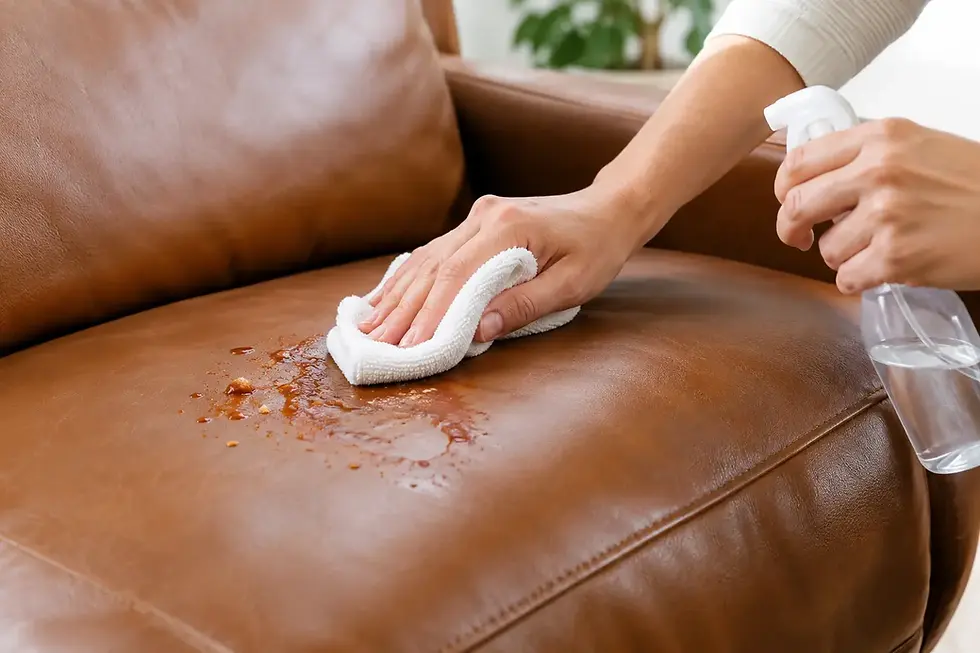
For a fresh liquid spill, blot rather than wipe. Press a dry, white, lint-free cloth onto the area and allow it to absorb the liquid. Work from the outside of the mark towards the centre so it does not travel across the leather. Replace the cloth section as it becomes damp and continue until no more liquid transfers.
Avoid soaking leather. Water can leave tide marks, stiffen some finishes and affect the material beneath the surface. If the area needs light cleaning after blotting, use only a barely damp cloth and dry it straight away with a second clean cloth. Let the sofa dry naturally at room temperature, away from radiators, direct sunlight and hairdryers.
Before applying any leather cleaner, test it on a hidden area such as the rear of a cushion or underneath the sofa frame. Look for colour transfer, a change in sheen or a roughened feel once it has dried. If there is any change at all, stop.
First, Understand What Has Marked the Leather
A stain is not always a stain. Some marks sit on the surface, while others have reacted with or removed the leather's protective coating and colour. This difference determines whether cleaning can help.
A protected or pigmented leather sofa is common in family homes. It has a coloured finish and a protective top coat, which can make everyday spills easier to manage.
It is also worth looking at the condition around the mark. If the leather is already faded, cracked, worn or peeling, a cleaning attempt may reveal an uneven finish. In those cases, targeted colour restoration is often more effective than repeated cleaning.
Ink and pen marks
Ink is one of the most common household accidents on leather furniture, especially on pale sofas. Do not use hand sanitiser, perfume, nail varnish remover, hairspray or alcohol-based wipes. These can dissolve or dull the protective finish, leaving a larger pale area than the original pen mark.
Fresh ink has the best chance of being reduced, but it still needs the correct leather-safe treatment and a careful touch. Dab only. Rubbing spreads the ink into the grain and can create a blue or black shadow that is harder to disguise. If the ink has dried, or if it has penetrated a light-coloured leather, professional cleaning and recolouring may be required.
Food, drink and greasy marks
Tea, coffee, wine and soft drinks should be blotted immediately. A small amount of moisture can often be lifted before it settles, but do not flood the area with water. Sugary spills deserve particular care because residue can remain sticky and attract dirt long after the visible mark has faded.
For oil, butter, cosmetic creams or greasy food, resist the urge to use washing-up liquid or a degreaser. These products can remove oils from the leather finish and cause discolouration. Blot loose residue and leave the area alone if the mark does not lift easily. Grease can migrate through the leather, so further treatment depends on the finish and age of the stain.
Nail polish, glue and household chemicals
Nail polish and superglue are not ordinary stains. Solvents used to remove them can also remove the sofa's colour and top coat within seconds. Do not pick at dried glue, as this can pull away the surface coating. Likewise, avoid acetone, white spirit, bleach, paint thinner and multi-purpose stain sprays.
A bleach mark is usually colour loss rather than residue. Cleaning cannot put the original colour back. The affected area may need colour matching, restoration of the finish and protective sealing to blend it with the surrounding leather. The same is often true of chemical splashes, fake tan, hair dye and strong cleaning products.
Scuffs, scratches and dark transfer marks
Scuffs may be surface transfer from shoes, belts, pet claws or everyday use. A gentle leather-safe clean can sometimes improve a light mark, but deep scratches and colour loss need repair rather than more cleaning. Applying conditioner over a scratch may make it look temporarily darker, but it will not restore missing colour or repair a damaged coating.
Dark marks on headrests, armrests and seat edges are often a build-up of body oils, hair products and household grime. These areas benefit from professional cleaning before the leather becomes permanently discoloured or begins to crack. Regular attention is far easier than trying to reverse years of build-up.
Common Mistakes That Make Leather Stains Worse
Household advice for fabric upholstery does not automatically apply to leather. Baby wipes, washing-up liquid, vinegar, bicarbonate of soda and general-purpose sprays are often suggested online, but they are not a reliable solution for leather furniture. They can leave residue, affect the sheen or dry out the protective surface.
Steam cleaning is another risk. Heat and moisture can alter the finish, weaken adhesives and leave uneven patches. Conditioners also have their place, but they should be used on clean, suitable leather and not as a cure for every mark. Applying conditioner over dirt or a stain can seal in the problem.
The biggest mistake is repeated rubbing. If a mark is not improving after gentle blotting and a suitable test, stop before the damage becomes wider and more noticeable.
When Professional Leather Restoration Is the Better Choice
Professional help is sensible when there is ink, bleach, nail polish, glue, dye transfer, heavy grease, deep scratches or a visible loss of colour. It is also the right route for expensive furniture, older leather, pale upholstery and marks in highly visible areas such as centre cushions and armrests.
A specialist can assess whether the issue needs cleaning, stain treatment, colour restoration or a combination of all three. The goal is not simply to make the stain less obvious. It is to restore the colour, texture and finish so the repaired area sits naturally with the rest of the sofa.
Ashbourne Leather Care provides on-site leather furniture restoration across Dublin, Meath, Kildare and Louth. A clear photo of the affected area, along with a wider photo of the furniture and your location, gives a specialist a useful starting point for a quotation. This avoids guesswork and helps identify whether the damage is likely to respond to cleaning or needs a targeted repair.
Keep Future Marks Easier to Manage
Leather lasts well when it is cleaned gently and protected from the causes of premature wear. Keep sofas away from strong direct sunlight where possible, as fading makes later touch-ups more noticeable. Wipe light surface dust regularly with a soft dry cloth, deal with spills promptly, and avoid placing ink pens, cosmetics or strong cleaning products on the upholstery.
For busy family homes, the most practical rule is simple: blot fresh spills, do not experiment with harsh products, and seek advice early for anything that changes the leather's colour or finish. A small, well-handled repair can bring your leather back to life and help you enjoy the furniture you chose for years longer.


Comments