


Mobile Repair Options for Leather Furniture

Mobile Repair Options for Leather Furniture. A faded patch on the seat cushion, a fresh ink mark on the arm, or a scrape from a pet can make an otherwise beautiful leather sofa look tired overnight. The good news is that mobile repair options can often deal with the visible damage at home, without the cost, disruption and uncertainty of replacing furniture that is still structurally sound.
For many homeowners, the question is not simply whether a sofa can be repaired. It is whether the result will look right, last well and be worth the investment. The answer depends on the type of leather, the cause of the damage and the quality of the repair method used.
What mobile repair options can solve
Mobile leather repair is designed for damage that affects the appearance and finish of your furniture while leaving the main frame, springs and cushioning in good condition. A specialist visits your home, assesses the leather and carries out suitable restoration work on site.
This is particularly useful for leather sofas, armchairs, recliners and other upholstered pieces that are awkward to transport. There is no need to arrange collection, leave a gap in the sitting room for weeks or risk further damage while furniture is moved.
On-site repair can be suitable for a wide range of common problems, including scuffs, scratches, colour loss, stains, dye transfer and worn areas where the original finish has rubbed away. Accidental damage such as ink, nail polish, glue and bleach marks may also be repairable, provided the area is assessed properly before work begins.
The goal is not to apply a quick cover-up. Good leather restoration involves preparing the surface, addressing the damage, matching the colour as closely as possible and rebuilding the finish so the repaired area sits naturally with the rest of the furniture.
Repair, refurbishment or replacement?
A small scratch and a heavily faded three-piece suite do not need the same approach. Understanding the difference between a targeted repair and full refurbishment helps you choose the most sensible option.
Targeted repairs for isolated damage
A targeted repair is usually the right choice when the damage is limited to one area. Perhaps a pen leaked onto one cushion, a handbag buckle left a deep scrape, or cleaning products have caused a pale spot on an armrest. The specialist focuses on that section, treating the mark or damaged finish and blending the colour into the surrounding leather.
This approach is often the most cost-effective option for isolated accidents. It also preserves the original character of the furniture, rather than changing its overall appearance.
Results depend on the depth of the damage. A surface scuff is generally more straightforward than a cracked leather, while bleach damage can require more colour restoration because it removes pigment rather than simply sitting on top of the leather. A professional assessment sets realistic expectations before work starts.
Colour restoration for faded leather
Leather sofas often show their age first on the areas used most - seat cushions, headrests, armrests and the front edge of the sofa. Body oils, sunlight, friction and regular use gradually wear down the protective finish and leave the colour uneven.
Colour restoration is a more comprehensive service. The leather is cleaned and prepared, areas of wear are treated, and the colour and finish are restored to revive a more even appearance. This can make a tired sofa feel cared for again without losing the comfort and quality that made it worth buying in the first place.
It is particularly worthwhile for good-quality furniture where the leather is worn cosmetically but the structure remains strong. Replacing a premium sofa because of surface wear can be expensive, while professional refurbishment may extend its useful life significantly.
Cleaning when the finish is still intact
Not every dull or marked sofa needs recolouring. Some leather simply needs careful specialist cleaning to remove built-up grime and restore a cleaner, fresher appearance. This is different from using general household cleaners, which may strip coatings, leave residue or make a stain worse.
Cleaning works best where the leather finish is intact and the issue is surface dirt, light soiling or reduced lustre. Where colour has worn away, however, cleaning alone will not replace it. That is when colour restoration or a targeted repair becomes the better option.
Why at-home leather repair makes sense
Mobile Repair Options for Leather Furniture. The obvious advantage of a mobile service is convenience. Large furniture stays where it belongs, and repairs can often be completed without turning your home upside down. For busy households, that matters.
There is also a practical advantage in seeing the furniture in its normal setting. Lighting, surrounding colours and the overall condition of the piece all help when assessing the repair. A colour that appears close under workshop lights may look different beside your flooring, walls and other seating, so on-site assessment supports a more considered result.
Mobile work is not automatically the answer to every issue. Severe structural damage, extensive splitting across multiple panels, badly perished leather or major cushion and frame problems may require a more involved upholstery solution. Honest advice is part of good service. If restoration will not offer a result that justifies the cost, it is better to know that before committing.
What affects the cost of leather restoration
There is no useful one-price-fits-all answer because leather repairs vary widely. A small scuff on a chair is very different from restoring colour across a large corner sofa.
The main factors are the size and location of the damage, the type of leather, the condition of the existing finish, how accurately the colour needs to be matched and whether the work is localised or covers several sections. Damage on a prominent armrest or seat cushion may need more careful blending than a mark in a less visible area.
Photographs are the simplest starting point. Clear pictures of the damaged area, along with wider photos of the furniture and your location, allow a specialist to understand the likely work involved and provide a quotation. It also gives you the opportunity to ask whether repair, cleaning or refurbishment is the best fit for your furniture.
Avoid making damage harder to repair
When an accident happens, the urge to fix it immediately is understandable. Unfortunately, some DIY attempts can make professional restoration more difficult. Strong cleaners, solvents, bleach, abrasive sponges and unsuitable leather dyes can spread a stain, remove more colour or damage the protective coating.
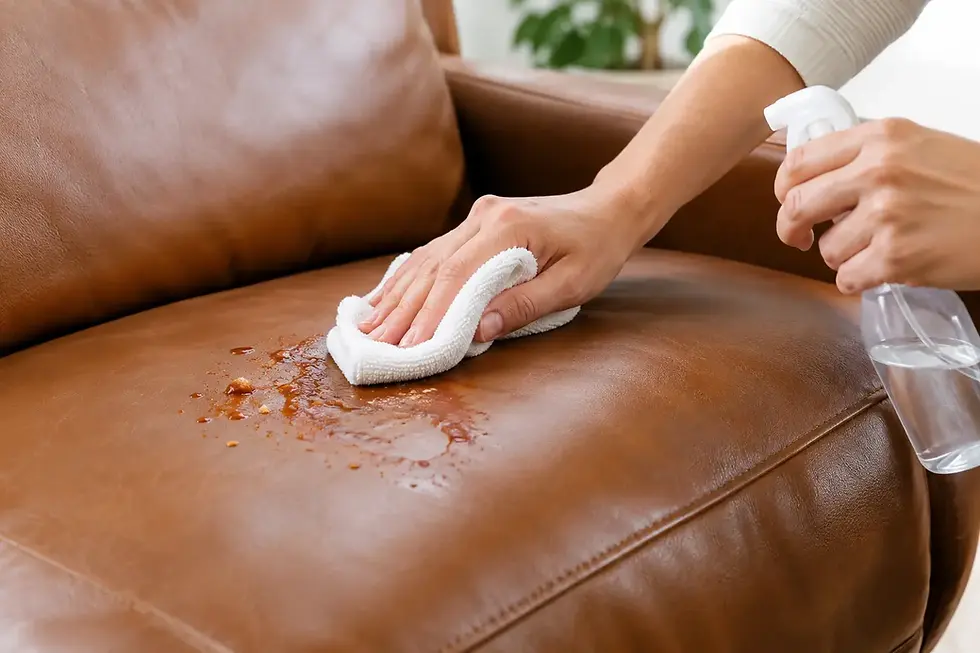
For fresh spills, blot gently with a clean, dry cloth rather than rubbing the area. Avoid applying random household products, especially if you do not know the leather type or what caused the mark. Ink, glue, nail polish and bleach damage all need different treatment, so a product that helps one problem may worsen another.
Be cautious with online repair kits too. They can be useful for very minor marks in the right hands, but colour matching is rarely as simple as choosing "brown" or "black". Leather changes over time, and a poorly matched repair can become more noticeable than the original scuff.
Choosing a specialist for mobile repairs
Leather furniture is not just another cleaning job. It requires an understanding of coatings, pigments, surface preparation and finish. The best results come from a repairer who assesses the actual cause of the damage rather than applying the same product to every mark.
Look for clear advice about what can be achieved, a straightforward quotation process and a focus on restoring the appearance of the piece rather than promising unrealistic perfection. A well-carried-out repair should improve the furniture noticeably while respecting its age, use and original finish.
For homeowners in Dublin, Meath, Kildare and Louth, Ashbourne Leather Care provides on-site leather restoration for worn, faded, stained and accidentally damaged furniture. Sending photographs before booking is a quick way to find out what is possible and what level of work your sofa may need.
A damaged leather sofa does not always signal the end of its useful life. Before arranging a replacement, take a clear photo of the problem and have it assessed. A careful repair can restore the colour, finish and pride you felt when the furniture first took its place in your home.


Comments