


Best Furniture Repair Methods for Leather Sofas

Best Furniture Repair Methods for Leather Sofas. A leather sofa can look tired long before it is ready to be replaced. One ink mark on the arm, a pale patch where sunlight has faded the colour, or a cluster of scratches from a pet can change how the whole room feels. The best furniture repair methods are not about covering up damage with a quick fix. They are about identifying what has happened to the leather, treating it safely, and restoring a finish that looks right in your home.
For homeowners, the right approach can save a quality sofa from the expense and disruption of replacement. It also avoids the common problem of making a small mark worse with unsuitable household products.
Start by identifying the leather and the damage
Leather is not one uniform material. A protected, pigmented leather sofa has a coloured surface coating and is generally more practical for family homes.
Before choosing a repair method, look at the damage closely. Is it sitting on the surface, has the colour been removed, or has the leather itself been cracked or worn thin? A scuff may need only careful cleaning and colour touch-up. A bleach mark needs colour restoration.
This first step matters because the wrong treatment can set a stain, strip the finish or create an obvious shiny patch. If you are unsure, taking clear photographs in daylight is the safest place to start.
The best furniture repair methods for common leather problems
Surface dirt, body oils and dullness
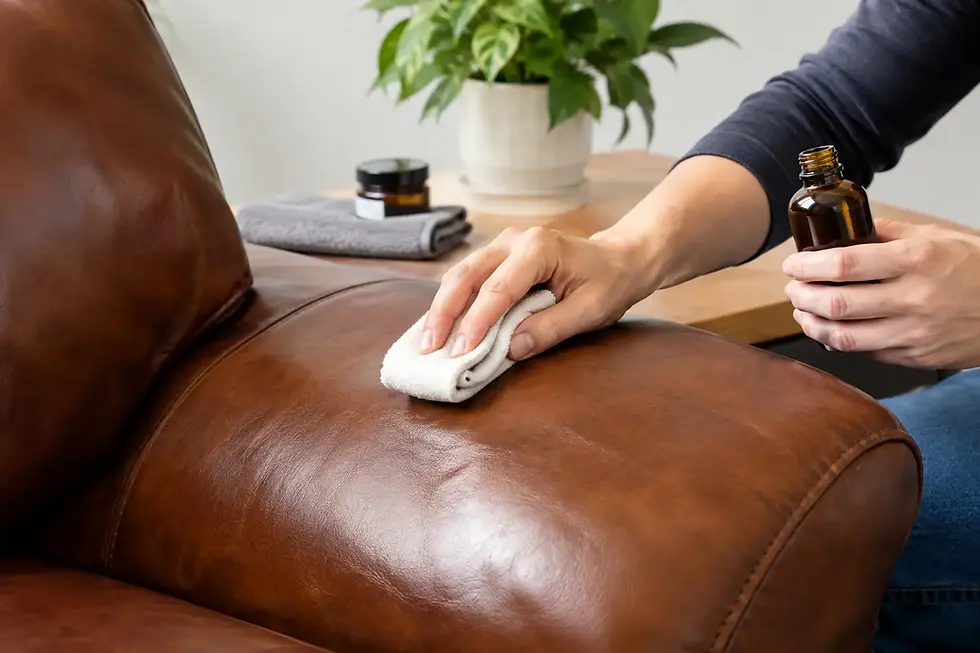
Daily use leaves leather looking flat for a reason. Body oils, hair products, dust and general household grime collect most noticeably on headrests, armrests and seat cushions. The best first response is a leather-safe cleaner applied sparingly with a soft cloth, followed by a suitable conditioner where appropriate.
Avoid soaking the leather or spraying product directly onto the sofa. Too much moisture can leave water marks, and heavy oils or waxes may make the surface sticky. Household cleaners, washing-up liquid and baby wipes are also risky. They can remove protective coatings or leave residues that attract more dirt.
A proper clean can make a remarkable difference to the appearance of sound leather. However, cleaning will not reverse fading, cover white scuffs or repair cracking. It reveals the true condition, which makes the next repair stage clearer.
Scuffs, scratches and colour loss
Light scuffs are often visible because the coloured finish has been disturbed, exposing a paler layer beneath. Pet scratches and abrasion around the front edge of a seat can have the same effect. In these cases, colour restoration is usually one of the most effective repair methods.
The leather is prepared, a carefully matched colour is built up in light layers, and the repaired area is refinished to achieve the correct sheen. Matching the finish is just as important as matching the colour. A matte sofa repaired with a glossy coating, for example, may look more noticeable than the original scratch.
DIY colour products can work for tiny, low-visibility marks if the leather is otherwise in good condition. The trade-off is that off-the-shelf shades are rarely an exact match, particularly on older sofas where the colour has softened over time. For prominent areas, professional colour matching produces a more natural result.
Ink, nail polish, glue and accidental spills
Accidents happen quickly, especially in busy homes. Ink, nail polish, glue and certain cosmetics can bond to the leather finish or penetrate it. The temptation is to scrub hard or reach for nail polish remover, disinfectant or a strong solvent. That is often where a repair becomes more complicated.
With a fresh spill, blot gently with a clean, dry cloth. Do not rub it into the grain. Avoid applying heat, and do not use harsh chemicals unless you know they are suitable for your particular leather. If the stain remains, leave it alone rather than experimenting with several products.
Specialist stain removal involves assessing whether the substance can be lifted safely without disturbing the colour coating. In some cases, complete removal is possible. In others, the best result comes from removing as much staining as possible before restoring the affected colour and finish. Honest assessment matters here: the age of the stain, the leather type and any previous cleaning attempts all affect the outcome.
Bleach stains and faded areas
Bleach does not simply leave dirt behind - it removes colour. Similarly, prolonged sunlight can cause one section of a sofa to become lighter than the rest, particularly beside a window. These issues cannot be cleaned away.
The effective method is colour restoration. After preparing the area, the lost colour is rebuilt and blended into the surrounding leather. For widespread fading, treating the full panel or sofa may give a more even result than repairing one small section in isolation.
This is where a specialist service can be a practical alternative to replacement. A structurally sound leather sofa may only need its colour and protective finish revived to look cared for again.
Cracking, peeling and worn seating areas
Cracking around seat creases is a warning sign. Sometimes it is limited to the surface finish and can be stabilised, filled and recoloured. If the leather beneath has become dry or thin repair is still possible in many cases, but expectations should be realistic. A repaired area can be strong and attractive, yet it may not have the untouched grain of new leather.
When professional on-site repair makes sense
Best Furniture Repair Methods for Leather Sofas. A home repair kit can be useful for small scuffs on a less visible panel. It is less suitable for colour loss on a main seat, a stain caused by bleach or ink, peeling material, tears, or anything on a premium sofa where a poor match will stand out.
Professional repair is also valuable when convenience matters. Removing a large sofa can be costly and awkward, particularly in a flat, terrace or busy family home. An on-site service allows the furniture to be assessed and restored where it sits, without arranging collection or being left without your sofa for weeks.
At Ashbourne Leather Care, customers can send photographs of the damage and their location for a clear quotation before arranging a visit. This helps establish whether cleaning, targeted repair, colour restoration or wider refurbishment is the most sensible route for the furniture.
Help the repair last longer
Once leather has been restored, a few simple habits protect the result. Keep sofas out of prolonged direct sunlight where possible, wipe up spills promptly and use only products designed for your leather type. Rotate loose cushions if the design allows, as this helps prevent one seat taking all the daily wear.
Be mindful of sharp clothing details, pet claws and heavily dyed fabrics such as new denim, which can transfer colour onto pale leather. Regular gentle cleaning is more effective than waiting until the sofa looks heavily soiled and then using aggressive products.
A well-made leather sofa earns its place over years, not just seasons. When marks, fading or wear begin to show, choosing the right repair can bring back its colour, comfort and presence - while keeping a piece of furniture you already love in your home.


Comments