


Repair Kits Versus Professionals for Leather

Repair Kits Versus Professionals for Leather. A leather couch can go from looking well loved to badly worn surprisingly quickly. One ink mark, a patch of colour loss on the armrest, a scrape from a pet or a bleach splash can draw the eye every time you enter the room. When deciding between repair kits versus professionals, the real question is not simply which option costs less today. It is which option gives your furniture the best chance of looking right again.
A repair kit can be useful for light maintenance and very minor marks. But leather is not one uniform material, and a quick fix applied to the wrong finish can leave a bigger, more noticeable problem than the original damage. For valuable furniture, visible damage or anything involving colour, an experienced repair is often the more economical choice in the long run.
Repair kits versus professionals: what is the difference?
Most home leather repair kits contain some combination of cleaner, filler, adhesive, colourant, applicators and a finishing product. They are designed to help a homeowner tackle small issues without arranging a visit. That can sound straightforward, but the result depends heavily on identifying the leather correctly, preparing it properly and matching both its colour and sheen.
Professional restoration is more than applying colour over a damaged area. It begins with assessing the leather, the cause of the damage and the condition of the surrounding finish. The repair can then be built up in stages, using suitable products and techniques to restore the surface, colour and protective coating as naturally as possible.
That difference matters most on a sofa. Leather furniture is viewed in broad daylight, under lamps and from different angles. A colour that seems close in the bottle may look too dark, too warm or too flat once it has dried across an armrest or seat cushion. A professional repair aims to blend with the existing leather rather than simply cover the damaged spot.
When a DIY leather kit may be enough
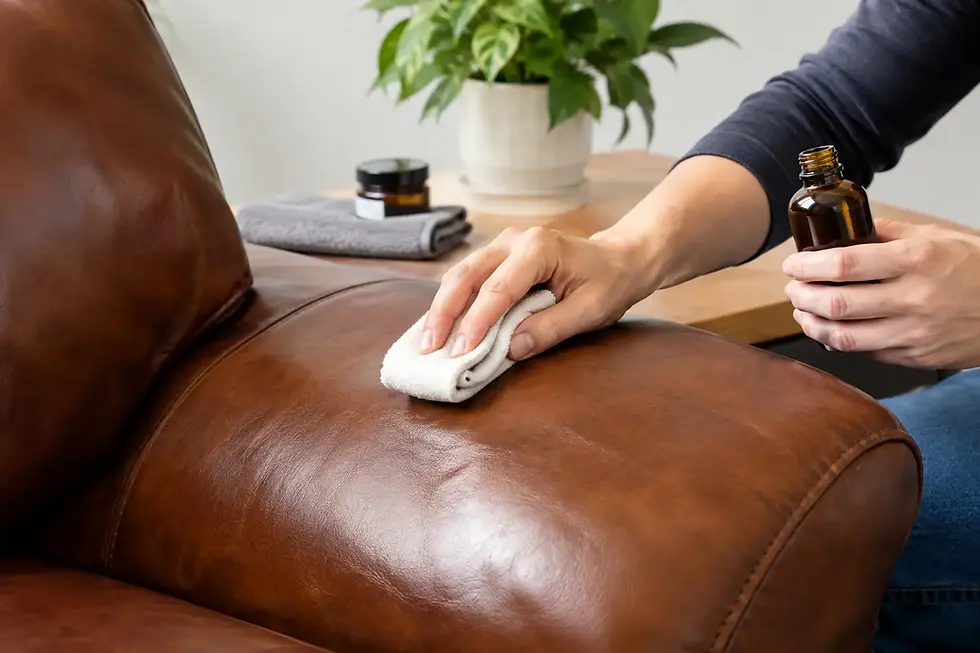
There are situations where careful DIY care makes sense. Routine cleaning, light conditioning and the removal of fresh surface dirt can help preserve leather that is otherwise in good condition. A very shallow scuff in a discreet area may also be manageable, provided the leather has not lost colour or suffered a tear.
A kit may be worth considering when the damage is small, you are comfortable accepting an imperfect result and the furniture is not a high-value centrepiece. For example, a minor mark on the rear of a chair or a barely visible rub on a side panel may not justify a specialist visit.
The key is to keep expectations realistic. DIY products cannot recreate every type of leather finish, and they cannot reliably solve damage that has gone below the surface. If the repair needs to be invisible, or close to it, the margin for error is much smaller.
The risks hidden inside a quick repair
Repair Kits Versus Professionals for Leather. The biggest problem with many repair kits is not that they never work. It is that they encourage a one-product solution for a material with many different finishes. Pigmented and protected leathers all respond differently to cleaning agents, dyes, fillers and coatings. Even two sofas that appear similar can require a different approach.
Colour matching is another common issue. Leather changes over time through sunlight, heat, cleaning products and everyday use. A manufacturer colour name or a generic brown, cream or black dye rarely accounts for that ageing. Applying an unmatched colour can create a hard-edged patch that is more obvious than the original fade or scuff.
Texture and sheen are equally important. Leather may have a soft matt finish, a gentle satin lustre or a more polished appearance. A repair that is too shiny can look like a wet spot. One that is too matt can look chalky. If filler is used heavily or not sanded with care, it may feel rough and crack again as the leather flexes.
There is also the risk of locking in the damage. Ink, glue, nail polish, bleach and certain household cleaners all need different treatment. Rubbing at ink with the wrong solvent can spread it. Adding colour over glue may leave a raised patch. Bleach damage is not simply a stain, as it can remove colour from the leather itself. A poor attempt can make later restoration more difficult and more time-consuming.
Damage that is best left to a leather professional
If the sofa has a visible issue on a seat, armrest, front panel or headrest, professional help is usually the safer option. These are the places people notice first and the areas that receive the most wear. A repair needs to cope with continued sitting, rubbing and cleaning without quickly breaking down.
Professional attention is particularly worthwhile for colour loss, fading from sunlight, deep scuffs, scratches, cracking finishes and worn areas where the top colour has rubbed away. It is also the sensible choice for accidental household damage such as biro marks, bleach stains, nail polish, adhesive and paint.
Large-scale refurbishment is another case where a kit is unlikely to give a satisfying result. When an entire sofa has become dull, patchy or faded, treating one area at a time can lead to uneven colour and finish. A specialist can assess whether the furniture needs a targeted repair, colour restoration across larger panels, cleaning and protection, or a combination of these services.
The value of on-site restoration
Homeowners often assume a damaged sofa must be collected, taken to a workshop or replaced altogether. In many cases, it can be restored in your own home. This avoids the inconvenience of moving bulky furniture and allows the repair to be assessed in the lighting and surroundings where the sofa is used.
A mobile specialist can also see the true condition of the whole piece. What looks like a single scuff in a photograph may be part of a wider pattern of wear on the arms, cushions or headrests. Equally, a mark that appears alarming may only require careful local treatment. A proper assessment prevents both over-treatment and under-treatment.
Cost is not just the price of the kit
A repair kit is cheaper at the checkout, but it can become expensive if it fails. Once colour has been applied unevenly, a finish has become sticky or a stain has been spread, the next repair may require more preparation to put things right. In some cases, an attempted DIY repair can reduce the likelihood of a near-invisible result.
Professional restoration is quoted according to the damage, the leather type and the work required. That makes it easier to compare the cost with replacement, especially for a good-quality sofa that is structurally sound. Replacing leather furniture often means spending far more than expected, while restoration can extend the life of a piece you already know is comfortable and suited to your home.
There is also value in certainty. Rather than buying products, testing colours and hoping for the best, you can receive clear advice on what can realistically be achieved. A reputable specialist will explain whether a repair can be blended, whether a wider colour restoration is advisable and what aftercare will help protect the result.
How to make the right choice before touching the damage
Start by looking closely at the affected area. Is it only surface dirt, or has the colour been removed? Is the leather scratched? Has the mark come from ink, bleach, glue, cleaning products, nail polish or another substance? The cause matters as much as the appearance.
Next, consider where the damage sits. A small mark on a hidden panel gives you more room to experiment than a scrape on the front of a cream sofa. Think about how closely the result needs to match and how much daily wear that part of the furniture receives.
Finally, avoid acting in haste. Do not use household wipes, strong cleaners, acetone, abrasive pads or random online remedies before you know what leather you are dealing with. These shortcuts often strip protective coatings, remove colour or drive a stain further into the surface.
For homeowners in Dublin, Meath, Kildare and Louth, Ashbourne Leather Care offers a straightforward route to an informed decision. Send clear photographs of the damage along with your location, and a specialist can advise on the likely repair and provide a quotation before any work begins.
Your sofa does not need to be perfect to deserve proper care. If a minor, hidden mark is genuinely within your comfort zone, a cautious DIY approach may be reasonable. But when the damage is visible, coloured, deep or emotionally frustrating every time you see it, a professional restoration can bring your leather back to life without the cost and upheaval of replacement.


Comments