


Sustainable Sofa Restoration That Makes Sense
- ashbourneleathercare

- Aug 6
- 5 min read
Sustainable Sofa Restoration That Makes Sense. A leather sofa rarely becomes unusable all at once. More often, the colour fades where people sit most, the arms become dry and worn, a pen mark appears after homework, or a dropped cleaner leaves a pale patch. Sustainable sofa restoration is about dealing with that damage properly, so a good piece of furniture can stay in your home rather than being replaced before its time.
For homeowners across Dublin, Meath, Kildare and Louth, it can be a practical decision as much as an environmental one. Replacing a large leather sofa is expensive, disruptive and often unnecessary when the structure is sound and the issue is confined to the surface, finish or colour.
Why restoring a leather sofa is the more sustainable choice
A sofa is a substantial household item. Sending it away means more than losing a familiar piece of furniture: it adds bulky waste to the disposal system and creates demand for a new item to be manufactured, packaged and transported. Even when an old sofa is collected, there is no guarantee that all of its materials can be reused.
Restoration extends the useful life of what you already own. If the frame, springs, cushions and leather are fundamentally in good condition, targeted repair can deal with the visible problems without discarding the whole sofa. That might mean recolouring faded seating areas, repairing a scrape, treating a stubborn stain or restoring an even finish across worn panels.
There is also a quality point to consider. Many older leather sofas have solid frames and comfortable cushioning that would be costly to match today. A well-made sofa with surface wear is not necessarily at the end of its life. It may simply need skilled attention.
What sustainable sofa restoration can repair
Leather is durable, but it is not immune to daily life. Sunlight, body oils, pets, children, cleaning products and simple use all leave their mark over time. The right approach depends on the leather type, the finish and the cause of the damage. A repair that looks right on one sofa may not suit another.
Fading, colour loss and worn seating areas
The most common issue is gradual colour loss on seats, arms and headrests. Dark leather can become patchy or grey-looking, while lighter colours may appear dull or uneven. This is often mistaken for dirt alone, but it can be wear to the protective colour finish.
Professional colour restoration is designed to rebuild a consistent appearance and match the surrounding leather as closely as possible. Preparation matters here. Applying colour over oils, residues or loose finish will not produce a lasting result, which is why proper cleaning and surface preparation come before refinishing.
Scuffs, scratches and accidental damage
Scuffs from shoes, scratches from pets and abrasions from everyday use can make a sofa look tired long before it needs replacing. Some marks affect only the top finish, while deeper damage may require filling and more detailed repair before colour is restored.
Ink, nail polish, glue and bleach marks need particular care. Household solvents or internet remedies can spread the problem, strip colour or leave a shiny patch that is more obvious than the original mark. The safest first move is to avoid rubbing or adding more products until the leather has been assessed.
Stains and cleaning mistakes
Not every stain can be removed completely, especially if it has penetrated deeply or altered the leather’s colour. However, cleaning, localised repair and colour work can often greatly improve the appearance. The aim is not to promise a miracle before seeing the furniture. It is to choose the most effective treatment for the condition in front of us.
This honest assessment is part of sustainability too. A sensible repair should improve the sofa’s life and appearance, rather than covering damage temporarily with a finish that will fail quickly.
When restoration is a better option than replacement
Sustainable Sofa Restoration That Makes Sense. Restoration is usually worth considering when the sofa remains comfortable, stable and well proportioned for your room, but looks worn or damaged on the surface. It is particularly valuable for leather furniture that has sentimental value, suits your home, or would be expensive to replace like for like.
It may be less suitable where there is extensive structural failure, severe cracking across large areas, major damage to multiple panels, or deterioration caused by prolonged damp. Even then, a specialist opinion can help you understand whether a targeted repair is realistic or whether replacement is the better investment.
The key distinction is between cosmetic wear and a sofa that has genuinely failed. Fading, scuffs, stains and isolated accidents are often repairable. A broken frame is a different matter. Looking at the whole piece, rather than judging it by one damaged area, leads to a better decision.
A careful process protects the result
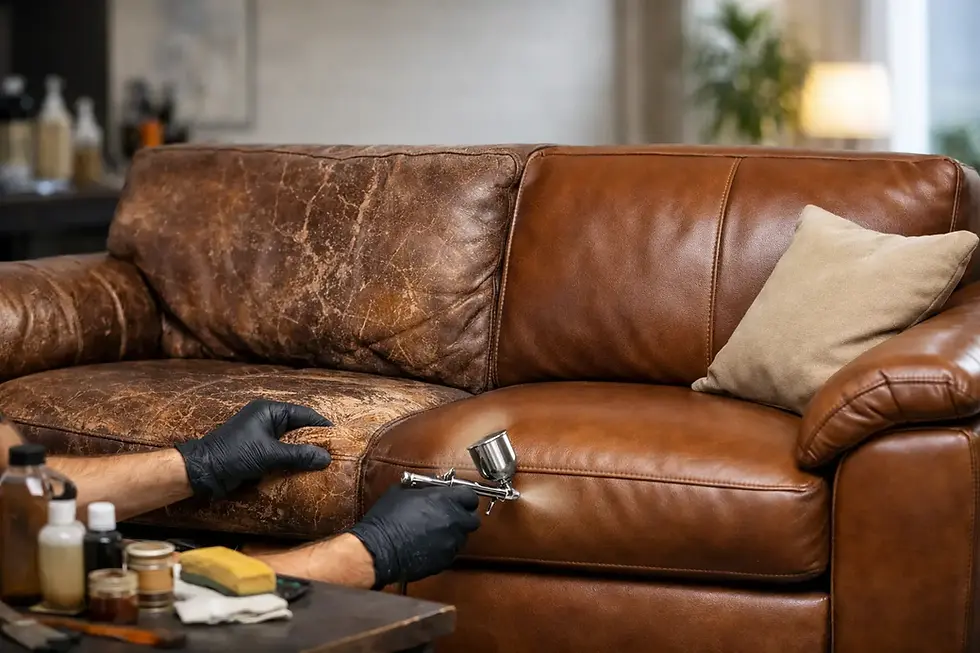
Sustainable restoration is not simply putting colour over a problem. Good work begins with identifying the leather, examining the damage and checking how far it extends. The leather is then cleaned and prepared so that repair materials and colour can bond properly.
Where needed, scratches or damaged areas are repaired before colour is applied. Colour is matched to the existing finish, then blended into the surrounding leather to avoid a harsh, obvious patch. A suitable protective finish helps the repaired area sit naturally with the rest of the sofa and stand up to normal use.
This process is why professional repair can look far better than a quick DIY attempt. Leather finishes have different levels of sheen, texture and flexibility. Using the wrong cleaner, dye or coating can leave a sofa sticky, overly glossy, stiff or mismatched.
Keeping restored leather looking good
Once your sofa has been restored, simple habits make a real difference. Keep it out of strong, direct sunlight where possible, as UV exposure speeds up fading. Wipe up spills promptly with a clean, soft cloth and avoid aggressive household cleaners, disinfectant sprays and wipes unless they are confirmed as suitable for your leather.
Regular, gentle cleaning prevents body oils and everyday grime building up on arms, headrests and seats. If you have pets, throws can protect favourite corners, but make sure they are colourfast and do not trap moisture against the leather. For pale leather in particular, be mindful of dye transfer from dark denim and clothing.
It is also worth acting early. A small scratch, fresh ink mark or localised colour loss is normally simpler to address than damage that has been rubbed, soaked or covered with unsuitable products. Early attention can preserve more of the original finish and keep the repair focused.
Convenient restoration without removing your sofa
One reason people put off furniture repair is the thought of arranging transport. A large sofa is difficult to move, and removal can be especially inconvenient in busy family homes, flats or properties with limited access. On-site restoration avoids that disruption.
Ashbourne Leather Care provides mobile leather furniture restoration, bringing specialist work to your home. Start by sending clear photographs of the damage, along with your location and a brief description of what happened. This allows the condition to be reviewed and a quotation to be prepared before a visit is arranged.
Photographs should include a full view of the sofa, a close-up of the damaged area and, where possible, a picture in natural light. If the problem is a stain or chemical mark, say what caused it and whether anything has already been used to clean it. That information helps determine the most suitable repair approach.
Give good furniture a proper second chance
A faded or marked leather sofa does not have to become another costly replacement. With the right assessment and skilled repair, many sofas can regain their colour, finish and place at the heart of the home. If yours is structurally sound but visibly worn, a few photographs could be the first step towards keeping it useful, comfortable and beautiful for years to come.


Comments