


An Armrest Restoration Example That Shows the Difference
- ashbourneleathercare

- Jul 22
- 5 min read
An Armrest Restoration Example That Shows the Difference. The armrest is often the first part of a sofa to show its age. This armrest restoration example shows why: it is where hands rest, sleeves rub, body oils build up and the leather takes daily friction. What begins as a slightly dull patch can become a visibly faded, rough or cracked area that makes an otherwise good sofa look tired.
For many homeowners, that damage creates a frustrating choice. Replacing a quality leather sofa can be expensive, while living with a worn armrest draws the eye every time you sit down. Professional restoration offers a practical middle ground, restoring the colour and finish of the damaged section without taking the furniture out of your home.
What the damaged armrest looked like
In this example, the sofa had a dark brown leather finish, but the outer edge and top of one armrest had become noticeably lighter. The surface colour had worn away through repeated use, leaving an uneven, grey-brown appearance. There were also shallow scuffs around the front corner, where the leather had been caught by bags, zips and everyday knocks.
The leather itself was still sound. It had not split through to the backing, and the cushioning underneath remained in good condition. That distinction matters. Surface wear, colour loss and light scuffing can usually be restored very effectively. Deep tears, extensive cracking or leather that has hardened and broken down may require a more involved repair and can affect what result is realistic.
The aim was not to make the armrest look freshly manufactured while leaving the rest of the sofa unchanged. The goal was to restore a consistent, natural-looking colour and finish that sat comfortably beside the surrounding leather.
How an armrest restoration is assessed
A proper repair starts with an assessment rather than a one-size-fits-all treatment. Leather furniture varies widely in its finish, colour and condition. Two brown sofas may look similar from across a room but react very differently to cleaning products, dyes and repair materials.
Photos taken in good natural light are often enough to begin a quotation. Clear images should show the damaged armrest from a distance, then closer photographs of the worn area, front edge and any scratches or cracks. It also helps to include one photo of the whole sofa and your location. This gives the specialist a clearer view of the leather type, the extent of wear and whether a mobile, on-site repair is suitable.
During the assessment, the key questions are straightforward. Is the damage limited to the finish? Has colour transferred or worn away? Are there scratches that need filling? Is the surface coated leather, pigmented leather or a more delicate finish? The answers determine the preparation and repair method.
The restoration process in this example
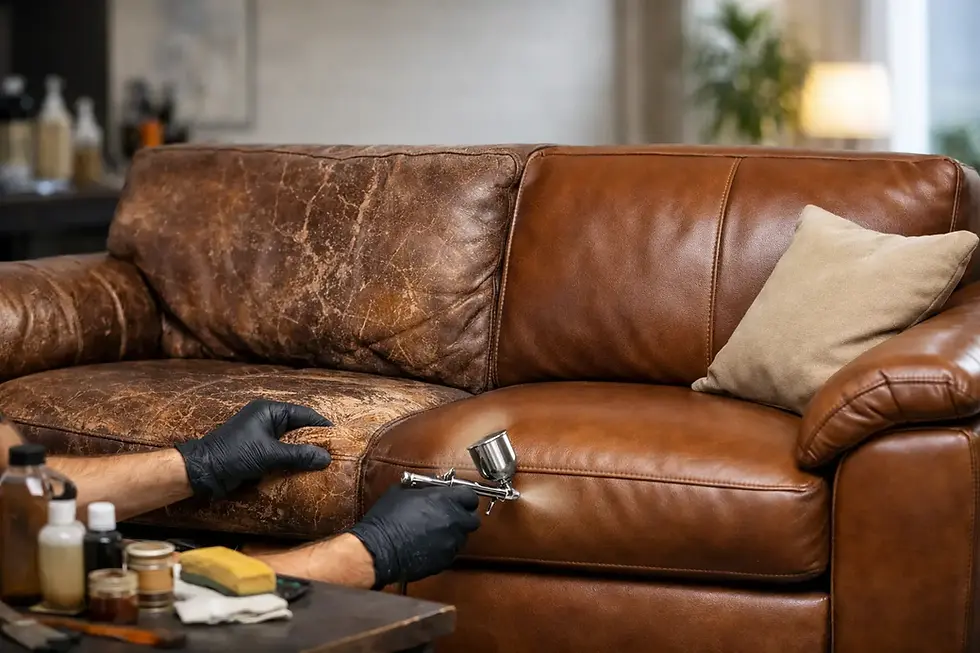
An Armrest Restoration Example That Shows the Difference. The first stage was a careful clean. Armrests collect natural oils from skin and hair products, along with dust and residue from household cleaning attempts. These contaminants can prevent new colour from bonding correctly, so the leather must be cleaned and prepared before any restoration begins.
Once the area was clean, the worn surface was lightly prepared to smooth raised edges around the scuffs and remove loose finish. This is a controlled process. Too much abrasion can create a larger repair area, while too little preparation can leave the new coating sitting unevenly on the surface.
The shallow scratches on the front corner were then treated to reduce their appearance and level the surface. Not every mark needs heavy filling. On a leather armrest, overfilling can leave a repair looking stiff or obvious. The best approach depends on the depth of the damage and how flexible the leather needs to remain in daily use.
Next came colour matching. Rather than relying on a generic brown, the colour was adjusted to suit the sofa's existing tone. The surrounding leather had aged slightly over time, so matching the original factory shade alone would have been the wrong choice. A successful repair matches the sofa as it looks now, taking account of warmth, depth and how the colour changes under indoor light.
Colour was applied gradually in fine layers to rebuild the faded area. Applying too much material at once can produce a heavy, painted look. Layered application allows the colour to blend into the sound leather around it, particularly at the edges of the repair.
Finally, a protective finish was applied to bring back the appropriate sheen. This is a small detail with a big visual effect. A finish that is too glossy can make a restored armrest stand out; one that is too matt can leave it looking flat beside the rest of the sofa. The finish also helps protect the renewed colour from regular use.
The result: restored colour without replacing the sofa
After restoration, the armrest no longer had the pale, rubbed appearance that had drawn attention from across the room. The scuffs were greatly reduced, the colour was even again and the finish matched the rest of the sofa far more closely. The sofa retained its character, but looked cared for rather than worn out.
That is the value of a well-executed armrest restoration example. The improvement is not only about covering a damaged patch. It is about returning balance to the furniture, so the eye is not pulled towards one faded area every time you enter the room.
Results will always depend on the starting condition of the leather. A sofa with simple colour wear can often see a dramatic change. Leather with deep cracking, pet damage or previous DIY coatings may need more extensive work, and some signs of age may remain visible on close inspection. A good specialist will explain that clearly before work begins.
Why armrests wear faster than the rest of the sofa
Armrests are high-contact surfaces. Unlike seat cushions, which spread pressure across a larger area, the armrest edge is repeatedly rubbed in the same narrow zone. Hands transfer oils, sweat and residue from moisturisers or hair products. Clothing can abrade the surface, while pets, watches, jewellery and remote controls can cause scuffs and scratches.
Sunlight can add to the problem. If one side of a sofa sits near a window, UV exposure may fade that armrest faster than the rest of the furniture. Heat from radiators can also dry leather over time, making its finish less flexible.
Regular, suitable leather cleaning can slow this process, but it cannot prevent all wear. Avoid household sprays, washing-up liquid and strong degreasers, as they can strip protective coatings or leave residues behind. If a spill happens, blot it gently rather than rubbing it further into the leather.
When to arrange professional leather restoration
It is worth seeking advice when the armrest begins to feel rough, looks lighter than the surrounding leather, develops visible scuffs or has picked up an accidental mark such as ink, glue, nail polish or bleach. Acting early can keep a localised issue from becoming a larger restoration job.
Professional repair is particularly worthwhile when the sofa is structurally sound, comfortable and otherwise in good condition. Replacing a premium leather sofa because of one worn armrest rarely makes financial sense. On-site restoration can be a far less disruptive option, with no need to arrange collection or be without your furniture for weeks.
For homeowners in Dublin, Meath, Kildare and Louth, Ashbourne Leather Care provides specialist on-site leather furniture restoration for worn, faded and damaged sofas. A clear set of photographs is the simplest place to start. Show the affected armrest, the wider sofa and the damage in daylight, then request a quotation based on the condition you can see.
A worn armrest does not have to decide the fate of a good sofa. If the leather beneath is still in reasonable condition, timely colour restoration and careful finishing can bring the piece back into keeping with the home you chose it for.

An Armrest Restoration Example That Shows the Difference


Comments