


Best Ways to Revive Leather Chairs at Home

Best Ways to Revive Leather Chairs at Home. A leather armchair can look tired long before it is beyond saving. The seat may have gone dull where it gets the most use, the arms may be darkened by skin oils, or a small scuff may catch your eye every time you enter the room. When people search for the best ways revive leather chairs, they usually want a practical answer: can it be brought back without the cost and disruption of replacement? In many cases, yes - but the right approach depends on the leather, the damage and the finish you are trying to restore.
Start by identifying what has changed
Leather is not one single material or finish. A smooth, coated leather armchair needs a different approach from an absorbent leather armchair, while faux leather can react badly to products intended for genuine hide. Before applying anything, look closely at the surface.
If the armchair simply appears dry, flat or lightly marked, careful cleaning and conditioning may improve it. If the colour has worn away, the surface is cracked, or there is damage from bleach, ink, glue or nail polish, home treatment is unlikely to create an even, lasting result. Trying several strong products in succession can make professional repair more difficult later.
Check the care label if one is available, especially on newer furniture. If you are unsure whether the material is genuine leather, bonded leather or vinyl, avoid guessing. The wrong cleaner can strip colour, leave a sticky finish or make a delicate surface patchy.
The best ways to revive leather armchairs safely
Remove surface dust before cleaning
Start with the simplest step. Use a soft vacuum brush attachment around seams, buttons and edges, then wipe the chair with a clean, dry microfibre cloth. Dust and grit act like fine abrasives, particularly on seats and armrests, and can gradually wear away the finish.
For light everyday soil, use a leather cleaner designed for furniture rather than a general household spray. Apply it to a cloth, not directly to the chair, and work gently in small areas. Do not soak the leather. Excess moisture can settle in stitching, cause tide marks and affect the padding beneath.
A clean cloth should lift ordinary grime without leaving the leather wet or slippery. Allow the chair to dry naturally away from radiators, fires and direct sunshine. Heat may seem like a quick fix, but it can dry the leather too rapidly and contribute to stiffness or cracking.
Condition only when the leather needs it
Conditioner can help leather feel more supple and reduce the dry, lifeless appearance that develops with age. It is useful for leather that feels slightly stiff after cleaning or has lost its natural softness. However, conditioner is not a cure for missing colour, deep creases, peeling or a damaged protective coating.
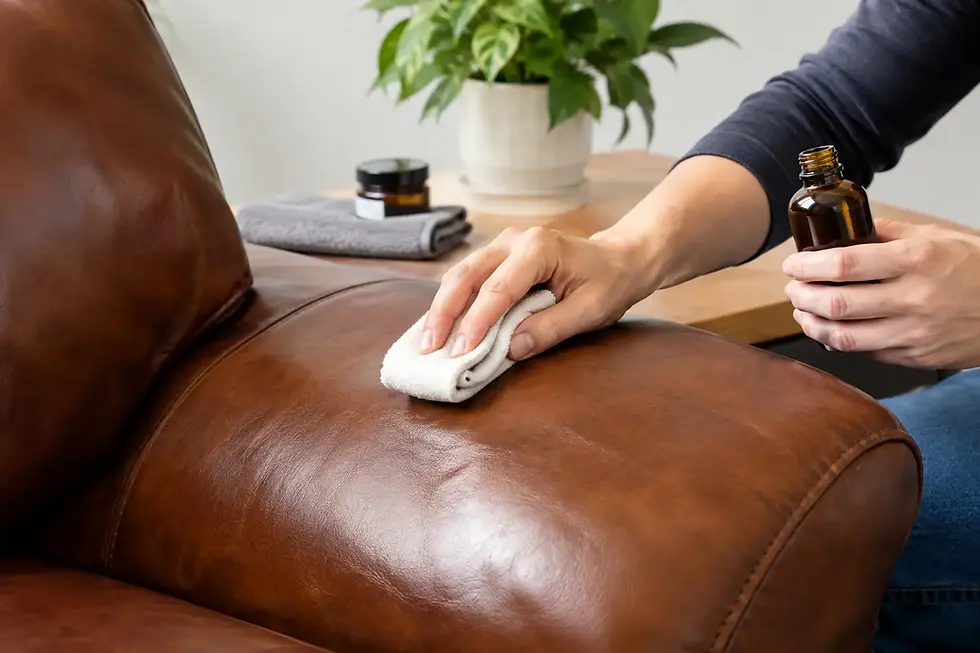
Apply a small amount of a suitable furniture leather conditioner to a soft cloth and test it in a hidden spot first. Use a thin, even layer rather than trying to feed the leather with large quantities of product. Too much conditioner can leave a residue that attracts dirt and makes the chair look greasy.
This is particularly important with modern coated leather. Much of what you see and touch is the protective finish and colour layer, not bare hide. It still benefits from appropriate care, but it does not need oils or heavy treatments designed for old-fashioned, untreated leather.
Treat fresh spills quickly and calmly
For many household accidents, speed matters more than force. Blot a fresh spill with a clean, absorbent cloth. Do not rub, as rubbing can drive the stain further into the grain or spread it over a larger area.
Water-based marks may respond to a gentle leather cleaner. Grease, ink, nail polish, hair dye, glue and bleach are different matters. They can alter the colour or finish as well as leave a stain. Avoid nail polish remover, bleach, washing-up liquid, baby wipes, hairspray and strong alcohol-based cleaners. These popular home remedies often remove more than the mark - they can take away the chair's colour coating too.
If there is any residue sitting on the surface, such as dried glue, do not pick or scrape it with a blade. Photograph the damage first. A close-up photo in natural light gives a leather repair specialist a much clearer idea of what is involved.
When cleaning is not enough
A armchair can be structurally sound but look worn because the finish has failed in the areas used most. Common signs include pale armrests, dark headrests, scuffs on the outer edges, scratches from pets, faded patches and colour rubbed away on the seat.
These problems generally need more than cleaning. A proper refurbishment may involve preparing the affected area, repairing minor surface damage, matching the existing colour, applying colour carefully and recreating the correct sheen. A chair with a soft matt finish should not come back looking shiny, and a deep brown chair should not be left with an obvious lighter repair patch.
Colour matching is one reason professional work can make such a difference. Leather changes over time with daylight, use and cleaning, so the original manufacturer colour is not always the colour currently in your home. The aim is to blend the repaired section naturally with the surrounding leather, not simply apply a close-looking dye from a bottle.
Scuffs, scratches and cracked areas
Light scuffs may improve after a careful clean, particularly when they are only surface marks. Deeper scratches, scrapes and abrasions can expose a lighter layer underneath. These usually require targeted repair and recolouring to prevent the damage from becoming more noticeable with use.
Cracking needs an honest assessment. Fine lines in an older chair may be largely cosmetic, whereas leather that is splitting, peeling or flaking may have a more serious finish issue. Bonded leather and some faux leather products are especially prone to peeling, and restoration options can be more limited than with good-quality genuine leather. A specialist can advise whether repair will give a worthwhile result before any work begins.
Fading, stains and colour loss
Fading caused by sun exposure is often most visible on the side nearest a window or on the top of a chair back. Cleaning will not return lost pigment. Colour restoration can revive the original depth and make the chair sit properly with the rest of the room again.
Bleach marks are similar. Although they are often described as stains, bleach usually removes or changes colour rather than depositing something that can be cleaned away. Ink may penetrate quickly, while nail polish can bond to the coating. Each needs a tailored repair method, and delay or repeated DIY attempts may increase the area that needs attention.
Protect the finish once the armchair looks better
A revived leather armchair will stay attractive for longer with modest, regular care. Dust it weekly, clean it with an appropriate leather cleaner when needed, and condition it sparingly according to the product guidance and the chair's condition. For a chair used every day, a light clean several times a year is more sensible than waiting until dirt has built up heavily.
Positioning also matters. Where possible, keep leather furniture away from prolonged direct sunlight, strong heat sources and damp conditions. If the chair is in a bright room, closing blinds during the strongest sun can slow fading. Take care with belts, denim, pet claws and decorative studs too, as repeated contact is often behind the marks that appear to have happened overnight.
Choose repair when replacement feels wasteful
Best Ways to Revive Leather Chairs at Home. Replacing a good leather armchair because of a stain or worn colour can be expensive, particularly when it is part of a matching suite or suits the room perfectly. Restoration is often a practical alternative when the frame, cushioning and overall leather condition are still sound.
For homeowners in Dublin, Meath, Kildare and Louth, Ashbourne Leather Care provides on-site assessment and restoration for worn, faded, stained and damaged leather furniture. Sending clear photos of the chair, the damaged area and your location is the simplest way to obtain a quotation and find out whether cleaning, colour restoration or targeted repair is the best route.
A well-used leather chair should show character, not neglect. Give it gentle care where gentle care will work, and call on specialist repair when the finish, colour or surface has been compromised. That small decision can keep a favourite piece comfortable, presentable and in use for many more years.



Comments