


How Leather Restoration Technology Saves Sofas
- ashbourneleathercare

- 10 hours ago
- 6 min read
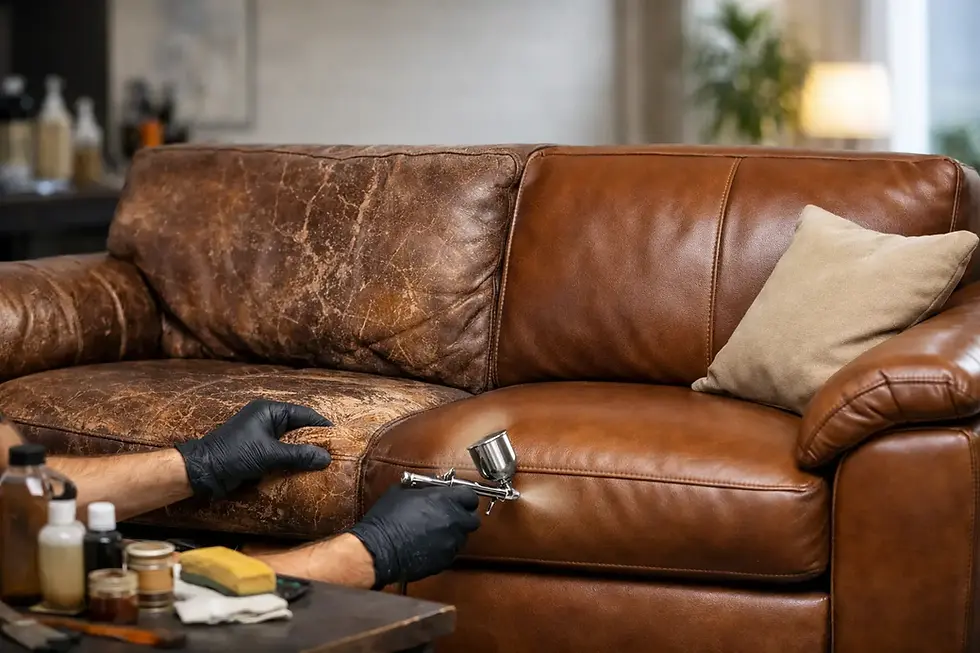
How Leather Restoration Technology Saves Sofas. A leather sofa can look beyond saving long before it actually is. A faded armrest, a bleach mark on a cushion or a collection of scratches from daily family life can make the whole room feel tired. Leather restoration technology gives skilled technicians the tools to treat the damage precisely, often at your home, without the cost and upheaval of replacing furniture that is still comfortable and structurally sound.
For homeowners across Dublin, Meath, Kildare and Louth, the value is practical: a professional repair can restore the colour, finish and appearance of a much-loved sofa while avoiding delivery delays, disposal costs and the uncertainty of finding a suitable replacement.
What leather restoration technology really means
The phrase can sound complicated, but the aim is straightforward. Modern leather restoration combines specialist cleaning products, colour-matching systems, flexible repair compounds and durable protective coatings. Used in the right order, they can improve the appearance of worn, stained or accidentally damaged leather without making it look heavily painted or artificial.
It is not a single product poured from a bottle. Good results come from diagnosis first. Leather upholstery varies in finish, grain, colour and condition. What works on a smooth, pigmented leather sofa may be unsuitable for an aniline leather piece with a more natural, absorbent surface. A technician needs to identify the leather, assess the damage and choose a repair process that suits that particular area.
That distinction matters. Covering a stain without preparing the surface can leave a patch that catches the light. Applying the wrong cleaner can strip colour or alter the feel of the leather. The technology supports the repair, but experience is what makes the finish convincing.
How leather restoration technology treats common damage
How Leather Restoration Technology Saves Sofas. Most household damage falls into a few familiar categories, and each needs a different approach. The best repair is usually targeted. There is no benefit in treating an entire sofa aggressively when the problem is confined to one seat, one arm or a small section of piping.
Fading, colour loss and worn seating areas
Sofas often lose colour where people sit most, rest their arms or lean their heads. Sunlight can also fade leather close to windows, leaving one side lighter than the other. The issue is especially noticeable on dark brown, black, red and cream furniture, where uneven colour quickly becomes visible.
After careful cleaning and preparation, a technician can mix a colour to suit the existing leather and apply it in fine, controlled layers. This gradually rebuilds the colour rather than leaving a thick coating on top. A protective finish is then applied to help the repaired area blend with the surrounding upholstery and stand up to normal use.
Colour restoration can make a dramatic difference, but expectations should remain realistic. Deeply cracked leather may need repair work before recolouring, and severe sun damage can require treatment across a wider panel to achieve an even result.
Scuffs, scratches and scrapes
Surface scuffs are common around sofa arms, edges and front panels. They may come from shoes, belts, moving furniture, pets or simply years of use. Light scuffs can sometimes be improved through cleaning and colour restoration alone. Deeper scratches may need flexible fillers and fine surface work before colour is restored.
Flexible repair materials are designed to move with the leather rather than harden into a brittle patch. Once the surface has been levelled and the colour matched, the repair is far less noticeable. It may not erase every sign of a very deep gouge, particularly on heavily textured leather, but it can take the eye away from the damage and restore a cleaner, cared-for appearance.
Ink, nail polish, glue and accidental marks
These are the accidents that cause understandable panic. Ink can spread if rubbed. Nail polish remover may remove more than the polish. Glue can bond quickly to the surface, while bleach can permanently remove colour rather than simply leaving a stain.
Specialist restoration uses controlled cleaning and removal methods to address the residue where possible. If the mark has affected the colour or finish, the area can then be repaired and recoloured. The order is crucial: colour should not be applied over contamination, and harsh household solvents should not be used in the hope of a quick fix.
If an accident happens, blot loose material gently where appropriate, avoid scrubbing and keep the product container if you have it. Knowing what caused the damage can help a technician choose the safest treatment.
Cracking, peeling and damaged finish
Not all cracking is the same. Fine creasing in a well-used seat can be natural, while cracking that exposes a lighter layer beneath often means the protective finish and colour have worn away. Peeling can also point to a coating failure, particularly on some corrected-grain or bonded leather products.
Restoration technology can rebuild worn coatings and improve the appearance of minor cracking, provided the underlying material remains stable. However, if the material itself is breaking down extensively, repair has limits. An honest assessment should explain whether refurbishment will provide a worthwhile result or whether reupholstery or replacement is the more sensible long-term option.
Why preparation and colour matching make the difference
The visible colour is only one part of a leather sofa's finish. Some leathers are matt, some have a gentle sheen and others have a more polished look. Their texture may be smooth, grainy, antique or lightly distressed. A colour that appears correct under one light can look wrong in daylight if the gloss level is not matched too.
Professional systems allow for colour adjustment in small increments, helping a technician account for age, fading and the natural variation across the furniture. The aim is not to make one spot look freshly manufactured while the rest of the sofa shows its age. It is to create a balanced, natural result that belongs with the rest of the piece.
Preparation also affects durability. Oils from hands, body products, household cleaners and everyday dirt can prevent repair products from bonding properly. Thorough but suitable cleaning gives restoration coatings a sound surface to adhere to. Skipping this stage is one reason quick, do-it-yourself touch-ups can fail or wear away quickly.
What on-site leather repair can save you
Replacing a quality leather sofa is rarely a simple purchase. There is the cost of the new furniture, time spent shopping, delivery arrangements, the removal of the old sofa and the possibility that the replacement does not feel as comfortable as the one you know. Where the frame, cushions and general condition are good, restoration can be a sensible alternative.
On-site work is particularly useful for large sofas, recliners and furniture that would be awkward to transport. Repairs can be carried out in your home, allowing the technician to assess the leather in its normal lighting and work on the affected areas without removing the furniture from the room.
That does not mean every sofa should be restored. A piece with major structural failure, widespread tearing or severe deterioration may require a different solution. But cosmetic damage, fading, stains, scuffs and localised wear are often exactly where professional refurbishment offers the best value.
Choosing the right restoration service
Before arranging a repair, take clear photographs in natural light. Include a wider image of the furniture, close-ups of the damage and a photo that shows the true colour of the leather. Mention what caused the mark, if known, and whether you have already tried any cleaning products. This helps produce a more accurate quotation and avoids unnecessary guesswork.
Look for a specialist who explains what can realistically be achieved, rather than promising that every defect will vanish completely. Ask whether the repair includes cleaning, colour restoration and a protective finish where needed. The goal should be a durable, well-blended repair, not a temporary cover-up.
Ashbourne Leather Care provides photo-based quotations and mobile leather furniture restoration, bringing specialist treatment directly to homes across its service area. It is a straightforward way to find out whether a faded, stained or scuffed sofa can be brought back to life before you commit to replacement.
A small mark does not have to become the reason to replace a sofa you otherwise love. Acting before wear spreads, colour loss deepens or unsuitable cleaners cause further damage gives leather the best chance of looking at home in your room for many more years.


Comments