


How to Repair Leather Peeling on Your Sofa
- ashbourneleathercare

- Jul 31
- 5 min read
How to Repair Leather Peeling on Your Sofa. A peeling sofa can make an otherwise tidy room feel tired very quickly. The good news is that it is often possible to repair leather peeling and restore a far more even, natural-looking finish without replacing the furniture. The right solution depends on what has actually failed: the coloured surface coating, a previous repair, or the material itself.
For homeowners, the most frustrating part is that peeling rarely stays in one small area. It commonly begins on a favourite seat, armrest, headrest or along the front edge of a cushion, then becomes more noticeable as everyday use lifts more of the loose finish. Acting early gives a repair the best chance of blending neatly with the surrounding leather.
What Causes Leather Furniture to Peel?
How to Repair Leather Peeling on Your Sofa. Most leather sofas have a protective colour and finish applied to the surface. This coating gives the furniture its consistent colour, sheen and resistance to everyday marks. Over years of use, friction from clothing, body oils, heat, cleaning products and repeated pressure can wear that finish thin.
Once the surface has weakened, it may crack, flake or peel away. Light-coloured furniture can show the contrast particularly clearly, while darker sofas may look patchy or dull before obvious peeling starts. A sofa positioned beside a radiator, in direct sunlight or close to a stove can deteriorate faster, as heat dries and stresses the finish.
Not every peeling issue is the same. Some sofas are genuine leather with damaged colour coating, which can often be professionally restored. Others are bonded leather, faux leather or vinyl-based materials. These can break down differently, particularly where the top layer separates from the backing. The result may look similar at first glance, but the likely durability of the repair is not the same.
First, identify the material and extent of damage
A professional assessment should look beyond the visible flakes. The key question is whether the leather underneath remains sound and flexible. If it does, careful preparation and colour restoration may produce an excellent result. If the base material is splitting, crumbling or separating widely across several cushions, a repair may improve its appearance but cannot turn an unstable material into new leather.
This is why photographs are so useful when requesting a quotation. Clear images of the damaged section, a wider photo of the sofa and a close-up of the surface help establish the likely material, colour and scale of the work before a visit. It also means you receive honest advice on whether restoration is a sensible investment.
Can You Repair Leather Peeling Successfully?
In many cases, yes. When the problem is worn or lifting surface colour on genuine leather, the repair process is designed to rebuild a smooth, even finish rather than simply cover the damage. The loose coating must be dealt with properly first. Painting over flakes or rubbing them down aggressively at home can leave a rough edge that becomes visible again as the sofa flexes.
A lasting repair normally involves cleaning the area to remove ingrained oils and residues, carefully preparing the damaged finish, smoothing minor surface imperfections and applying a matched leather colour. A protective topcoat is then applied to help the restored area withstand normal use. Matching the level of sheen matters as much as matching the colour. A repair that is too glossy, too flat or slightly off in tone can stand out even when the peeling has gone.
The condition of the furniture determines how localised the work can be. A small worn patch on an armrest may only need targeted repair and blending. If a cushion is faded, scuffed and peeling across a larger area, colour restoration over the full panel often delivers a more natural result. It avoids a visible edge between old and newly restored sections.
There are limits, and a reputable specialist should be clear about them. Severe degradation of bonded or imitation leather, extensive splitting through the material, or damage across every contact surface may make replacement the better long-term option. Restoration is about extending the life and improving the appearance of worthwhile furniture, not disguising a material that is failing beyond repair.
Why DIY Peeling Repairs Often Fall Short
Leather repair kits can seem tempting when the damage is small. They may have a place for a temporary touch-up on a less visible area, but they rarely account for the exact colour, texture or finish of your sofa. A generic black, brown or cream product can look noticeably different once dry, especially in daylight.
The bigger risk is preparation. Household cleaners, oils, polish, glue or thick filler can interfere with professional coatings later on. Scrubbing away loose material may also enlarge the damaged patch or expose an uneven surface. If you plan to seek a professional repair, avoid experimenting with strong solvents, nail polish remover, bleach-based cleaners or fabric dyes.
It is also worth remembering that leather upholstery moves. A product that looks acceptable on a rigid sample may crack, feel sticky or lift when used on a soft cushion. Professional leather coatings are selected and applied to retain flexibility, which is essential on seats, arms and back cushions that flex every day.
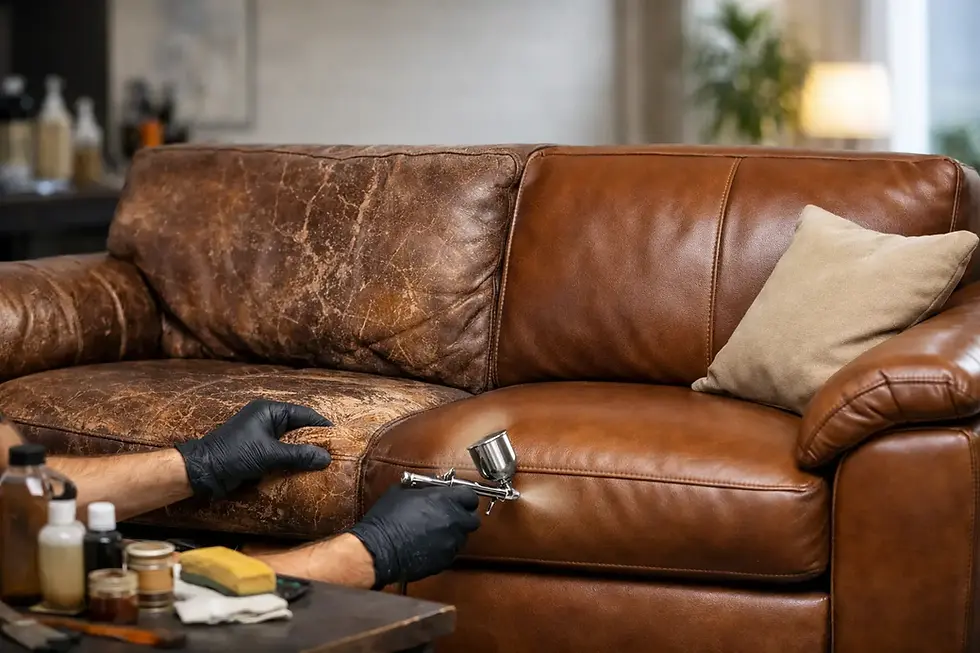
What a Professional Peeling Repair Looks Like
The aim is not to make the sofa look painted. It is to restore the colour, feel and finish so that the repaired section sits comfortably with the rest of the furniture. That takes more than applying colour to the damaged spot.
A specialist begins by assessing the leather type and determining whether any staining, fading, scuffs or old repairs need to be addressed at the same time. The affected area is then cleaned and prepared with care. Loose or unstable finish is removed only where necessary, and the surface is levelled before colour is built up in light coats.
Colour matching is particularly important on sofas that have aged unevenly. The original manufacturer shade may no longer match the areas exposed to light and daily wear. A good repair is matched to how the furniture looks now, then blended into adjacent panels. Finally, the finish is protected with an appropriate sheen so that it feels consistent rather than newly coated in one place.
Ashbourne Leather Care carries out this work at your home, so there is no need to arrange collection or be without your sofa for an extended period. For furniture owners in Dublin, Meath, Kildare and Louth, an on-site repair offers a practical route to restoring a valued piece without the cost and disruption of replacement.
Keeping Restored Leather Looking Its Best
After restoration, simple habits make a real difference. Dust and light soil should be removed regularly with a soft, clean cloth, rather than allowing grime to build up on high-contact areas. Use products made specifically for finished leather furniture, and avoid supermarket sprays intended for shoes, cars or heavily waxed leather goods.
Try to keep the sofa away from prolonged direct sunlight and intense heat. If one seat is used more than the others, rotating cushions where possible can help distribute wear. Wipe up spills promptly, especially ink, cosmetics, food oils and household chemicals. Do not rub a fresh mark into the leather. Blot it gently and seek advice before applying a cleaner that could set the stain or strip the finish.
If you notice a small area beginning to fade, crack or lift, do not wait until the damage spreads across the cushion. Early attention usually means less preparation, more straightforward colour blending and a better overall result.
A peeling leather sofa does not automatically belong at the kerbside. Send clear photos of the affected areas and your location for a tailored quotation, then let a specialist advise whether your furniture can be brought back to a finish you will be happy to live with.


Comments