


Leather Conditioners for Sofas: What Works?
- ashbourneleathercare

- Jul 24
- 5 min read
Leather Conditioners for Sofas: What Works? A leather sofa can look dry, dull and older than it really is long before the leather itself has reached the end of its life. Leather conditioners are often the first product homeowners reach for, and the right one can help maintain a soft, cared-for finish. However, a conditioner is not a cure for every mark, crack or faded area - and applying the wrong product can make a professional repair more difficult.
For leather furniture, good care is about understanding what you are looking at before treating it. A slightly dry armrest needs a different approach from a faded seat cushion, an ink mark, or a surface that is peeling away.
What leather conditioners actually do
A suitable conditioner is designed to keep leather feeling supple and reduce the dry, flat appearance that can develop through normal use. On some furniture, especially softer or more natural-looking leather, it can restore a little richness and improve the feel of the surface.
Most modern leather sofas are finished with a protective colour and topcoat. This means the conditioner is generally working on and through the finished surface rather than deeply nourishing raw hide. That is why a little goes a long way. Its value lies in regular maintenance and appearance, not in transforming badly damaged upholstery.
A good product may help reduce stiffness and leave the sofa looking more even after cleaning. It will not permanently remove scratches, repair cat damage, replace lost colour or rebuild cracked and flaking finishes. If the colour has worn away on the headrests, arms or seat edges, conditioning alone will not bring it back.
When a conditioner is the right choice
Leather Conditioners for Sofas: What Works? Conditioning makes sense when the leather is fundamentally sound but looks a little tired. Perhaps the sofa feels less soft than it once did, has lost some of its natural sheen, or is exposed to everyday use from family life, central heating and sunlight.
It is also useful as part of a sensible maintenance routine after the leather has been cleaned properly. Dust, body oils, food residue and household grime can build up gradually, particularly on pale sofas and the areas where people sit most often. Applying conditioner over this build-up can trap dirt against the surface and leave the finish looking patchy.
For most households, cleaning and lightly conditioning a sofa every six to twelve months is usually plenty. A busy family room, a home with pets, or furniture beside a radiator may need more attention. Very frequent conditioning is not necessarily better and can create a greasy feel or attract more dirt.
When leather conditioners will not solve the problem
The biggest mistake is treating visible damage as dryness. Leather can appear dull for many reasons, and not all of them respond to a conditioner.
Fading from sunlight, for example, is colour loss. A dark brown sofa may become unevenly pale on a window-facing arm or along the top of the back cushions. Conditioner may make that area look temporarily richer, but it cannot restore the missing colour. Professional colour restoration is the appropriate solution when you want the repaired section to blend naturally with the rest of the furniture.
Scuffs, scratches and scrapes can be equally misleading. A light surface scuff may look less obvious after gentle cleaning, but deeper damage needs targeted repair and colour matching. The same applies to cracking. Once the coating is damaged or lifting, adding oils or creams can soften the appearance for a short time without fixing the underlying problem.
Household accidents should not be treated with conditioner either. Ink, bleach, nail polish, discolouration, stains, glue and strong cleaning products can all alter the leather finish in different ways. Rubbing product into the affected spot may spread the damage, set a stain further into the surface or change the surrounding sheen.
Start by identifying your sofa leather
Not every material sold as leather should be conditioned. Genuine leather furniture may be protected, semi-aniline or more natural aniline leather, each with a different look and care requirement. There are also faux leather, bonded leather and vinyl sofas that can be damaged by products intended for real leather.
Protected leather is the most common upholstery type. It tends to have a consistent colour and a more even finish, often with a slight grain pattern. It is durable and practical, but it still benefits from gentle cleaning and a product made specifically for finished leather furniture.
Aniline leather is softer and more natural in appearance. It may show variation in colour, wrinkles and markings because less surface coating has been applied. It can absorb liquids more readily, so testing any care product in an unseen area matters even more.
If you are unsure what your sofa is made from, do not guess based on appearance alone. Check the original furniture label or care instructions where possible. When there is no information and the piece is valuable, a cautious approach is always the better one.
How to use leather conditioner safely
Before using any conditioner, vacuum the sofa gently with a soft brush attachment, paying attention to seams and creases. Remove loose dust first, because rubbing grit across leather can cause fine scratches.
Next, clean the leather with a suitable leather cleaner and a soft cloth. Avoid soaking the surface. Leather upholstery does not need to be saturated, and excess moisture can leave tide marks or affect the finish. Allow the sofa to dry fully before conditioning.
Apply a small amount of conditioner to a clean, lint-free cloth rather than directly onto the sofa. Work it into one small section using light, even strokes, then allow it to settle before judging the result. A little product should disappear into the finish without leaving obvious streaks or a slippery residue.
Always test first in a hidden area, such as underneath a cushion or at the back of the sofa. Check for darkening, colour transfer, tackiness or a change in sheen. If anything looks unusual, stop there rather than continuing across a highly visible area.
Resist the temptation to use household oils, shoe polish, baby wipes, moisturiser or general-purpose cleaning sprays. These products are not formulated for upholstered leather and can create a shiny, sticky coating, strip colour or interfere with future restoration work.
The trade-off: care products versus restoration
A conditioner is a cost-effective way to maintain a sofa that is in good condition. It can freshen the surface and help you protect furniture you already love. But it has limits, particularly where the finish has faded, worn away or been damaged by an accident.
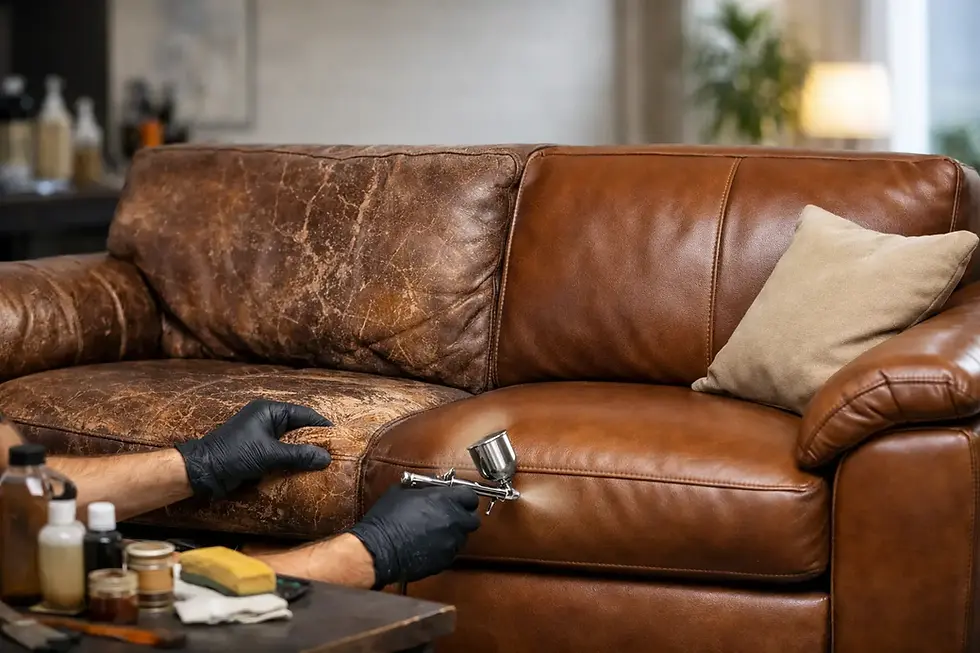
Professional leather restoration is designed for those more visible problems. The work can include deep cleaning, repairing scuffs and scratches, treating damaged sections, and restoring colour and finish so that the repair does not stand out. This is often far more practical than replacing a quality leather sofa simply because the seats or arms have seen better days.
At Ashbourne Leather Care, we assess damage from photos and provide a clear quotation before arranging on-site work. For homeowners across Dublin, Meath, Kildare and Louth, that means there is no need to move a heavy sofa or live without it while it is being repaired elsewhere.
A better routine for a sofa that gets used
Keep leather furniture away from direct, prolonged sunlight where possible, and avoid placing it tight against a radiator. Use a soft cloth to remove dust regularly, deal with spills promptly by blotting rather than rubbing, and reserve leather conditioners for occasional, light maintenance after cleaning.
If a mark has appeared, the colour is uneven, or the surface is beginning to crack or peel, pause before trying another product from the cupboard. A few clear photos in natural light can help a leather specialist identify whether your sofa needs simple care or a proper repair - and give it the best chance of looking beautiful again.


Comments