


Leather Upholstery Maintenance Every Homeowner Should Know

A leather sofa can look tired long before it is beyond saving. Body oils build up on favourite seats, sunlight drains the colour from armrests, and one accidental ink mark can turn into a much bigger problem after the wrong cleaning attempt. This is the leather upholstery maintenance every homeowner should know: gentle routine care, quick action after spills, and knowing when a repair needs specialist attention.
Good leather is a long-term investment. With the right care, it can remain comfortable, attractive and practical for years. The aim is not to constantly treat the surface, but to prevent dirt, dryness and damage from becoming permanent.
Leather Upholstery Maintenance Every Homeowner Should Know
The biggest mistake is treating leather like fabric. Leather has a protective finish, but it is still a natural material beneath that surface. Harsh sprays, excessive water and household cleaning products can strip the finish, alter the sheen or leave pale patches that are far more noticeable than the original mark.
For most homes, a light weekly clean is enough. Use the soft brush attachment on your vacuum to remove crumbs, dust and pet hair from seams, creases and beneath cushions. Then wipe the surface with a clean, soft cloth that is only slightly damp. This removes the everyday grime that can gradually make leather look dull or greasy.
Dry the surface naturally after wiping. Do not use a hairdryer, radiator or heater to speed things up. Direct heat can dry leather unevenly and may contribute to stiffness, cracking or colour loss over time.
Keep cleaning products simple and leather-safe
A product labelled for leather furniture is generally the safest choice, but suitability still depends on the type and finish of your upholstery. Protected leather is common on modern sofas and is usually more forgiving. Aniline and semi-aniline leathers can be more absorbent and require greater care, while older or previously restored furniture may need a different approach altogether.
Before using any cleaner or conditioner, test it on a small hidden area. Check not only for a colour change, but also for a change in sheen or feel once the leather has dried. If the surface becomes sticky, overly shiny or noticeably darker, stop using the product.
Avoid saddle soap, baby wipes, washing-up liquid, bleach, antibacterial sprays and general household polish. These are often suggested as quick fixes, but they can damage the protective coating or leave residue behind. Conditioner should also be used sparingly. Too much can soften the finish, attract dirt and make the sofa feel oily rather than cared for.
Protect the areas that wear first
Leather rarely wears evenly. The front edge of the seat, armrests, headrests and the spot where someone sits every evening usually show the first signs of use. These areas collect natural oils from skin and hair, along with dust from clothing and blankets. Left in place, that build-up can darken pale leather and weaken the finish.
A quick wipe of high-contact areas every week makes a real difference. Rotate loose cushions where possible so the same section does not take all the pressure. If you have a recliner, use it carefully and avoid forcing the mechanism or catching the leather in moving sections.
Location matters too. A sofa placed beside a sunny window may fade on one side, particularly in homes with strong afternoon light. Close blinds during the brightest hours, use curtains, or reposition the furniture if practical. Keep leather away from radiators, solid-fuel stoves and heat vents. It needs normal room conditions, not constant heat.
Homes with children and pets do not need to avoid leather furniture, but they do benefit from a little forward planning. Keep pens and craft supplies away from the sofa, trim sharp pet nails, and use throws in the most heavily used areas if that suits the room. A throw will not prevent every accident, but it can reduce everyday abrasion on a favourite seat.
Act quickly when spills and marks happen
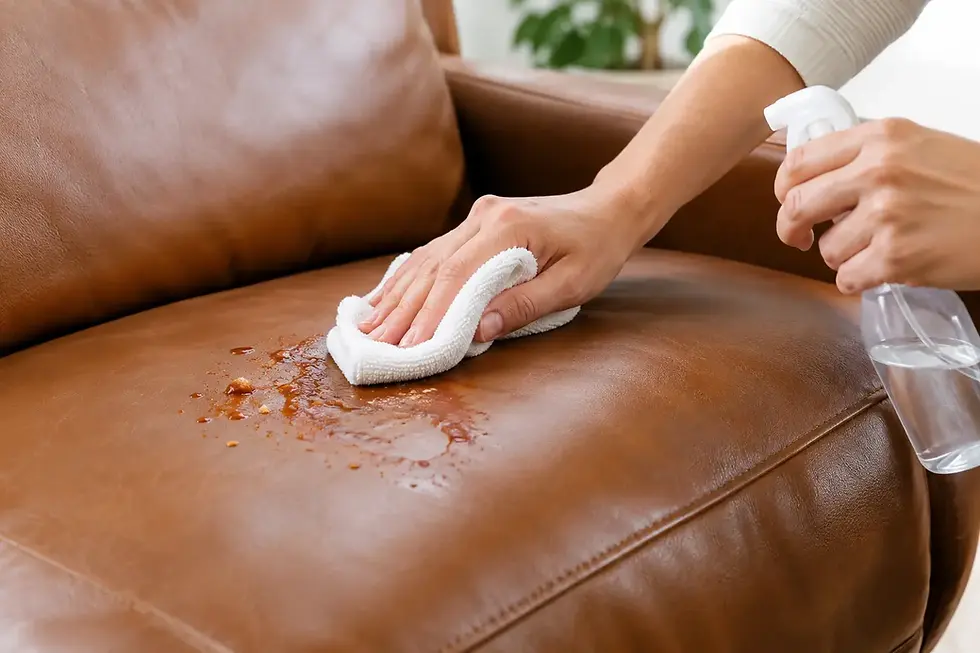
Speed matters, but panic usually causes the damage. If something is spilled, blot it gently with a clean, absorbent white cloth. Do not rub, as rubbing pushes liquid further into the surface and can spread the stain. Work from the outside edge towards the centre and allow the area to dry naturally.
Ink, nail polish, glue, hair dye and bleach are different from ordinary food or drink spills. They can react with the leather finish, remove colour or bond to the surface. Trying several internet remedies can turn a small localised mark into a large faded patch.
If an accident involves any of the following, stop after gentle blotting and seek specialist advice:
ink or permanent marker
bleach or strong cleaning chemicals
nail polish or adhesive
paint, hair dye or unknown liquids
Take clear photographs in daylight before applying anything else. Include a close-up of the mark and a wider photograph showing its position on the furniture. This makes it easier to assess whether cleaning, colour restoration or a targeted repair is the right solution.
Fading, scuffs and cracking need different treatments
Not every worn-looking sofa needs replacing. Surface scuffs can often be repaired and blended, while faded areas may respond well to professional colour restoration. Small scratches from pets or buckles may be less deep than they appear, particularly if only the colour coating has been disturbed.
Cracking needs a more careful assessment. Sometimes what looks like cracking is actually a worn or dry finish that can be restored. In other cases, the leather itself has become damaged through age, heat exposure or heavy use. The right repair depends on the depth of the damage, the leather type and the condition of the surrounding surface.
This is where a one-size-fits-all product can disappoint. A colour balm may temporarily darken a worn patch, but it will not reliably repair a damaged finish or match a specific sofa colour. It can also make later professional work more difficult if it leaves heavy residue or uneven pigment behind.
A specialist restoration can clean and prepare the affected area, repair surface damage where appropriate, restore the colour and apply a finish that matches the surrounding upholstery. The goal is a natural, durable result rather than an obvious patch.
Know when professional restoration is the sensible choice
Routine cleaning is something most homeowners can manage. Visible damage, colour loss and chemical marks are different. Professional help is often the better value when the sofa is good quality, structurally sound and otherwise suits your home.
Consider an assessment if your leather furniture has a noticeable ink stain, bleach mark, peeling or worn colour, scuffs that catch the light, pet scratches, or a seat that looks darker and duller than the rest of the sofa. These issues are often repairable without the cost and disruption of replacing the furniture.
At Ashbourne Leather Care, customers can send photographs of the damage along with their location to receive a quotation. Mobile, on-site restoration means there is no need to arrange collection or be without your furniture while it is being repaired. For homeowners across Dublin, Meath, Kildare and Louth, it is a practical way to bring worn leather back to life.
The best maintenance habit is simple: deal with small changes early. A gentle weekly clean and a quick response to accidents will protect the finish, while timely specialist repair can preserve the colour, comfort and character that made you choose leather in the first place.


Comments