


Can Permanent Leather Stains Be Repaired?

Can Permanent Leather Stains Be Repaired? A dark ink line across a cream sofa, a pale bleach mark on a favourite chair, or nail polish spilled during a busy evening can make permanent leather stains feel like the end of a piece of furniture. In reality, many marks described as permanent can be repaired or made far less visible. The right outcome depends on what caused the damage, the type of leather, and what has already been tried.
The key is to treat leather furniture differently from fabric. A stain may sit on the protective finish, soak into the surface, or remove the colour altogether. Those are three very different problems, and each needs a different repair approach.
What makes a leather stain seem permanent?
A stain is often called permanent when normal wiping no longer changes it. That does not necessarily mean the sofa is beyond repair. It usually means the mark has gone beyond surface cleaning.
Modern leather sofas are commonly finished with a coloured coating and a protective top layer. Ink, dye transfer, food spills and grease can penetrate or react with that finish. Bleach, acetone, strong cleaners and some beauty products can do something more serious: they can strip colour from the leather rather than simply leave material on it.
This distinction matters. A dark mark may need careful cleaning and sealing. A light patch where colour has been removed needs colour restoration. Trying to scrub both in the same way can spread the damage, alter the sheen, or create a larger patch that is harder to blend.
Leather type also affects the result. Protected leather is generally more forgiving than aniline or semi-aniline leather, which has a more natural, absorbent surface. Older furniture may have worn protection, faded areas and previous cleaning residues, making the repair less predictable. A specialist will assess the condition of the surrounding leather as well as the stain itself.
Permanent leather stains that can often be restored
Many household accidents can be addressed with targeted leather repair rather than replacement. The goal is not simply to hide the mark under a heavy coating. It is to restore colour, finish and feel so the repaired area sits naturally within the rest of the furniture.
Ink and pen marks
Ink is one of the most common causes of panic, particularly on pale sofas and dining chairs. Fresh ink has a better chance of being lifted, but older pen marks can still be improved. The challenge is that ink can migrate into the coating and leather grain. Aggressive cleaning may remove the protective finish before it removes the ink.
A professional repair may involve controlled ink removal, preparation of the surface, colour matching and refinishing. If the ink has penetrated deeply, complete invisibility is not always realistic, but a good repair can make it difficult to notice in normal use.
Bleach and chemical marks
Bleach is not a conventional stain. It removes or changes dye, leaving pale, orange or uneven patches. Household cleaners, sanitiser, acetone and some spot removers can cause similar colour loss.
These marks are usually repaired through colour restoration. The damaged section is carefully prepared, then colour is matched to the existing sofa and applied in fine layers. The final finish must match the surrounding leather too. A colour match can look wrong if the repaired patch is too glossy, too flat, or has a different texture.
Nail polish, glue and paint
Nail polish, glue and paint are difficult because they can bond to the surface. Picking at dried material with a blade, nail or abrasive pad risks cutting the finish and exposing the leather beneath it.
The repair approach depends on the substance and whether it is sitting on top of the coating or has reacted with it. Removal may be possible, but it often needs careful surface repair and refinishing afterwards. This is a case where a quick DIY fix can easily turn one small spot into a larger restoration job.
Dye transfer, grease and darkened areas
Dye transfer from jeans, dark clothing, cushions or throws can leave blue or grey marks, especially on cream, white and beige leather. Grease from hair products, body oils and everyday use can create darkened headrests, armrests and seat edges.
Early treatment gives the best chance of cleaning these marks successfully. Once the colour change has settled into worn leather, it may require a combination of cleaning, colour correction and protective finishing. The condition of the sofa matters here: a single fresh transfer mark is different from years of gradual darkening across a well-used armrest.
What not to do when you spot a stain
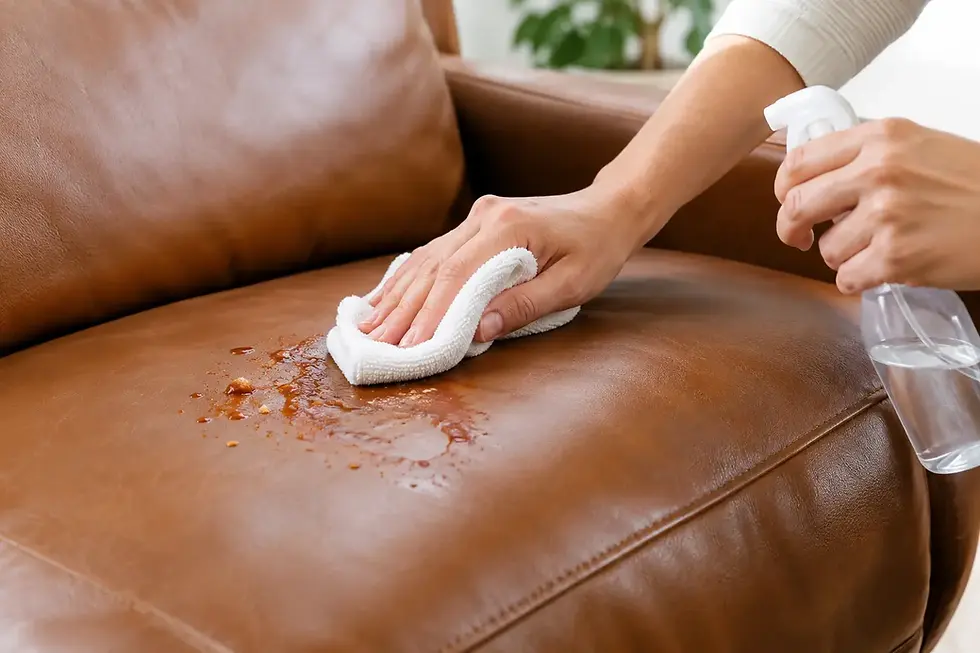
The first few minutes matter, but speed should not lead to harsh treatment. Blot a fresh spill gently with a clean, dry, absorbent cloth. Do not rub it into the grain. For solids such as fresh glue or nail polish, avoid scraping while the material is soft and likely to smear.
Keep household chemicals away from the area. Bleach, vinegar, washing-up liquid, antibacterial sprays, baby wipes, hairspray and solvent-based removers can leave residue, strip colour or weaken the protective coating. Products that work on fabric are not automatically safe for leather.
Avoid soaking the leather with water as well. Excess moisture can leave tide marks, affect the finish and make a stain travel. Heat from a hairdryer or radiator can dry the surface too quickly and increase the risk of stiffness or cracking.
If you have already used a cleaning product, do not keep adding different products in the hope that one will work. Take a clear photo in daylight and make a note of the substance involved and anything applied to the leather. That information helps a repair specialist choose the safest treatment.
When cleaning is not enough
Cleaning works when a substance remains on or close to the surface. Restoration is needed when colour has been removed, the finish has been damaged, or the leather has become rough, sticky, cracked or visibly different in sheen.
This is why a repaired stain often involves more than colour. The surrounding area may need gentle preparation so the new colour blends cleanly. A technician may rebuild minor surface damage, apply a matched leather colour, and finish the repair with the appropriate level of gloss. The result should be flexible and suitable for everyday use, not a temporary cover-up.
There are limits, and an honest assessment matters. Deep damage to very absorbent leather, widespread staining, severe cracking or previous DIY attempts can make a perfect result less likely. Even then, restoring the overall appearance can be far more cost-effective than replacing a quality leather sofa.
A practical route to repair
Can Permanent Leather Stains Be Repaired? For most homeowners, the simplest first step is to photograph the affected area and the wider piece of furniture. Include a close-up in natural light, a photo showing the sofa's overall colour, and an image of any label if it is available. Describe what caused the mark, when it happened and whether it has been cleaned already.
A photo-based assessment can establish whether the issue is likely to need cleaning, colour restoration, surface repair or a combination of treatments. It also avoids unnecessary guesswork with unsuitable products. For customers in Dublin, Meath, Kildare and Louth, Ashbourne Leather Care can assess the damage from photos and provide a quotation before arranging an on-site repair.
On-site restoration is especially useful for large sofas, matching suites and furniture that would be awkward to transport. The repair is completed where the furniture belongs, with attention paid to matching the existing colour and finish rather than replacing the entire item because of one accident.
Protecting the repair and the rest of the sofa
Once a stain has been restored, regular gentle care helps preserve the result. Dust the furniture with a soft cloth, clean it only with suitable leather-care products, and deal with fresh spills promptly. Keep leather away from prolonged direct sunlight where possible, as fading makes colour matching and future touch-ups more difficult.
Be mindful of the everyday sources of marks too. Dark denim, newspaper print, cosmetics, hair dye, hand sanitiser and pet accidents can all affect leather over time. This does not mean a leather sofa must be treated like a museum piece. It means small accidents are easier to resolve before they become ingrained damage.
A visible mark does not have to dictate the life of your furniture. Before replacing a sofa you otherwise love, have the damage assessed properly. The best repair starts with stopping the DIY experiments, identifying what has happened to the leather, and giving the colour and finish the careful attention they need.


Comments